



.svg.png)


If you’re a business owner, chances are you’ve heard plenty about content marketing and the outsized advantages it delivers over traditional marketing techniques. But hearing about it and actually building a content marketing strategy for your business are two very different things — and in 2026, the gap between businesses that have committed to content and those still relying on traditional outbound tactics has never been wider.
Content marketing for business is no longer a forward-looking experiment. It is the dominant engine of organic growth, lead generation, brand authority, and customer retention for businesses across every sector and size. And the ROI data behind it is now undeniable.
According to the Content Marketing Institute’s 2025 B2B Content Marketing Report, 73% of B2B marketers report that content marketing has helped them generate demand and leads, and 72% say it has helped them nurture those leads into paying customers. Meanwhile, businesses that have built mature, documented content marketing programs consistently outperform their peers on every key metric — from search visibility and organic traffic to conversion rates and customer lifetime value.
If your business has not yet committed to a serious content marketing strategy, you are not just missing out on a marketing channel. You are conceding organic ground, brand authority, and compounding ROI to competitors who are already building it. Let’s break down exactly why — and exactly how to fix it.
What Is Content Marketing for Business — and Why Has It Evolved?
Content marketing is the strategic creation and distribution of valuable, relevant, and consistent content designed to attract and retain a clearly defined audience — and ultimately, to drive profitable customer action. Unlike traditional advertising, which interrupts audiences with promotional messages, content marketing earns attention by providing genuine value first. The sale is the downstream result of trust built through content, not the opening move.
What has changed dramatically since the early days of blogging and whitepapers is the scope, sophistication, and competitive intensity of content marketing for business. In 2026, the content landscape spans blog posts, long-form guides, video series, podcasts, interactive tools, AI-personalized email sequences, social media content, webinars, case studies, data reports, and AI-generated search overviews — all competing for the same audience attention simultaneously.
The businesses winning in this environment are not those producing the most content. They are those producing the most strategically structured, audience-aligned, and search-optimized content — distributed across the right channels at the right cadence. Content marketing without strategy, as the original version of this post correctly noted, is a waste. But content marketing with a documented, data-informed strategy is one of the highest-ROI investments available to any business in 2026. Our strategic planning services are built to help businesses build exactly that — connecting content objectives to measurable business outcomes from the outset.
Building a Content Strategy That Actually Works in 2026
Content marketing in the absence of a documented strategy remains — as it always has been — a waste of time and budget. According to the Content Marketing Institute, businesses with a documented content strategy are three times more likely to report success than those operating without one. Yet a significant share of businesses still produce content reactively, without clear goals, defined audiences, or measurable KPIs.
A functional content strategy for business begins with three questions: Who exactly is your audience? What problems are they trying to solve? And what content formats and channels are they most likely to use when seeking answers? The answers to these questions shape every downstream content decision — from topic selection and keyword targeting to format, distribution channel, and publication cadence.
Your strategy must also define success in concrete terms. Is the goal to generate organic search traffic from target keywords? Build an email list through gated content? Establish topical authority in a competitive niche? Nurture existing leads through the middle of your sales funnel? Each objective requires a different content type, a different distribution approach, and different measurement metrics. Defining these upfront — and documenting them — is what separates businesses that consistently get ROI from content from those that produce content and wonder why it isn’t working. For businesses looking to understand how data flows from content performance into broader business decisions, our post on data-driven decision making provides the analytical framework that makes content measurement meaningful.
The S.M.A.R.T. goal framework — Specific, Measurable, Attainable, Relevant, and Timely — applies directly to content strategy. “Publish more content” is not a strategy. “Increase organic search traffic for our top 10 target keywords by 40% over the next six months through a weekly long-form blog publishing cadence” is a strategy.
The Real ROI of Content Marketing for Business: Updated 2026 Data
The ROI case for content marketing has strengthened considerably since the early benchmarks that circulated years ago. Here is what the current data actually shows:
Content marketing generates 3x more leads than outbound marketing at 62% less cost. This figure — originally published by Demand Metric and now consistently corroborated by subsequent research — has held remarkably stable across years of industry data. The cost efficiency of content marketing compounds over time in a way that paid advertising fundamentally cannot: a well-optimized piece of content continues generating traffic and leads for years after publication, while a paid ad stops the moment the budget runs out.
Conversion rates are up to 6x higher for businesses using content marketing. Research consistently shows that prospects who have consumed educational content from a brand before engaging with sales convert at significantly higher rates than cold outreach contacts. Content pre-qualifies leads, answers objections in advance, and establishes the trust that makes conversion conversations substantially shorter and more successful.
Companies with blogs generate 67% more leads per month than those without, according to HubSpot’s State of Marketing Report. For B2B businesses, long-form educational content — guides, case studies, original research, and in-depth explainers — consistently outperforms short-form content on both lead generation and SEO performance metrics.
The compounding effect is the most powerful ROI argument. Unlike paid media, which delivers returns only while active spend continues, content marketing builds compounding organic assets. A single high-quality, well-optimized blog post targeting a valuable keyword can generate consistent organic traffic for three to five years or longer. A library of 50 such posts creates an organic traffic engine that works around the clock without additional ad spend. This is why businesses that have invested in content marketing for three or more years report dramatically better cost-per-lead figures than those just starting — the compounding returns have had time to accumulate.
Content marketing’s influence on revenue is measurable and significant. According to research from McKinsey & Company, B2B companies that invest in content-led demand generation programs see 20–40% higher revenue growth rates compared to peers relying primarily on traditional outbound methods. The channel’s contribution to pipeline — when properly tracked through UTM parameters, CRM attribution, and multi-touch attribution modeling — is increasingly visible and boardroom-reportable.
6 Proven Ways Content Marketing for Business Drives Growth
1. It Generates Qualified Referral Traffic and High-Value Backlinks
Content quality is the engine of referral traffic. When your business publishes genuinely useful, original, well-researched content — the kind that answers real questions your audience is asking — other websites, journalists, and industry publications link to it as a reference. Those backlinks drive direct referral traffic and simultaneously strengthen your domain authority, which improves your organic search rankings across all your pages.
To maximize referral traffic, the most effective strategy is guest posting on high-authority publications in your niche. A single guest post on a respected industry site can drive thousands of qualified visitors back to your main website — visitors who already have a demonstrated interest in your subject area. The key is targeting publications that serve your exact target demographic, not just publications with high traffic. Quality of audience alignment matters more than raw volume. Your competitors are almost certainly already building this kind of referral network — and every month without a content strategy is a month they extend their authority lead.
2. It Increases Conversions Across the Entire Sales Funnel
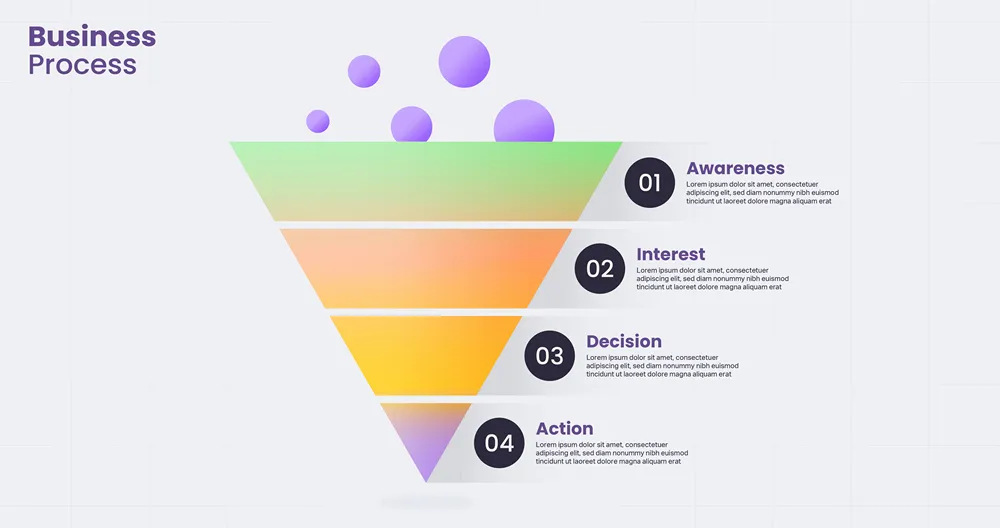
“Conversion” means something different for every business — an email signup, a webinar registration, a social share, a demo request, or a direct sale. Content marketing’s unique power is that it supports conversion at every stage of the funnel simultaneously. Top-of-funnel content builds awareness and attracts new audiences. Middle-of-funnel content nurtures consideration and builds trust. Bottom-of-funnel content — case studies, comparison guides, ROI calculators — converts consideration into action.
Gated content remains one of the highest-performing lead generation tactics available. High-quality gated assets — case studies, original data reports, white papers, webinars, and interactive tools — offer enough genuine value that prospects willingly exchange their contact information to access them. Once in your email list, those leads can be nurtured through automated sequences that guide them through the customer journey at their own pace, significantly reducing the burden on sales teams and shortening sales cycles. Our workflow and process automation services help businesses build the automated nurture infrastructure that maximizes the conversion value of every content-generated lead.
3. It Dramatically Increases Search Engine Visibility
Google’s algorithm in 2026 is built around one core principle: surfacing the most genuinely useful, authoritative, and trustworthy content for any given search query. That means businesses that consistently produce high-quality, well-structured, keyword-aligned content earn organic search visibility that compounds over time — while businesses relying on thin content or outdated SEO tactics find their rankings eroding.
Effective content marketing builds search visibility through two parallel mechanisms. First, each new piece of well-optimized content targets a specific keyword cluster — expanding the total number of queries for which your website has indexed, rankable content. Second, the internal linking between your content pieces builds topical authority signals that tell Google your domain is a comprehensive, trusted resource on your subject matter. Businesses that publish consistently — maintaining a regular cadence of new, high-quality content — see cumulative organic traffic growth that accelerates as their content library and domain authority expand together. The social media distribution layer amplifies this further, with social media platforms serving as critical content amplification channels that extend the reach of every piece published.

4. It Builds Domain Authority and Long-Term Brand Trust
Not only does effective content marketing improve your visibility in search results — it builds the domain authority that makes that visibility permanent and self-reinforcing. Every high-quality content piece your business publishes adds to a cumulative portfolio of authority signals that Google evaluates when determining how much trust to extend to your domain.
Domain authority is not built through any single piece of content. It is built through consistent, sustained, high-quality publishing over months and years. Businesses that commit to this long-term approach find that their entire website — not just their top-performing blog posts — begins to rank more competitively across target keywords. This is the compounding effect at work. Defining your brand through content — establishing a consistent voice, perspective, and set of values communicated through every piece you publish — is what transforms domain authority into genuine brand trust with your audience. And brand trust is ultimately what converts search visitors into customers and customers into advocates.

5. It Is the Most Cost-Efficient Lead Generation Channel Available
According to research by Demand Metric, content marketing costs approximately 62% less than traditional outbound marketing while generating roughly three times the leads. In a business environment where customer acquisition costs are rising sharply across paid channels — with Google Ads CPCs and Meta advertising costs both trending upward year over year — the cost efficiency of content marketing is more valuable in 2026 than at any previous point.
The economics become even more favorable when you account for content’s longevity. A paid ad campaign generates leads only while budget is actively running. A well-optimized blog post, guide, or video continues generating organic traffic and leads for years after the initial production cost is amortized. For businesses looking to optimize their marketing spend allocation, the long-term cost-per-lead from mature content marketing programs consistently outperforms every paid channel available. This is particularly relevant for businesses building their data analytics capabilities — understanding content ROI at the channel, format, and individual asset level is what allows marketing teams to continuously optimize their content investment for maximum return.
6. It Powers Customer Retention and Lifetime Value Growth
Content marketing’s most undervalued benefit is not lead generation — it’s customer retention. Businesses that continue publishing valuable content after the sale is closed maintain ongoing relationships with their customer base that dramatically increase retention rates, reduce churn, and grow customer lifetime value.
Post-purchase content — educational resources, product usage guides, best practice newsletters, customer success stories — keeps customers engaged, demonstrates ongoing value from the relationship, and positions your business as a true partner rather than a one-time transaction. Email marketing powered by content is particularly effective here: segmented email campaigns delivering relevant content to existing customers based on their product usage or purchase history consistently outperform generic promotional emails on both open rates and conversion to upsell or renewal. This is also where content marketing connects directly to the broader business goal of growing revenue operations — because retaining and expanding existing customers is almost always more cost-efficient than acquiring new ones.
Real-World Content Marketing Examples: What It Looks Like in Practice
HubSpot’s Blog and Resource Library is the most widely cited example of content marketing for business done at scale. HubSpot built its entire $1.7 billion business on the back of a content strategy — publishing thousands of educational articles, creating free tools, and building an email list of millions before ever making an aggressive sales push. Their content marketing investment effectively built the inbound marketing category and established HubSpot as the dominant brand within it. The ROI was not just lead generation — it was category ownership.
Salesforce’s Thought Leadership Content demonstrates how B2B enterprises use content marketing to build executive credibility alongside product authority. Salesforce publishes original research, industry benchmarks, and leadership-level insights through Salesforce+, its State of reports, and Trailhead — creating content experiences that serve multiple audience segments simultaneously and keep customers deeply engaged between purchasing decisions.
Semrush’s SEO Content Strategy is a masterclass in using content marketing to dominate a competitive niche. Semrush consistently publishes best-in-class educational content targeting high-value SEO and marketing keywords — often ranking on the first page for queries that directly serve their ideal customer profile. The result is a continuous stream of pre-qualified organic traffic from prospects who are already in the market for the exact tools Semrush sells. Their content investment has been one of the primary drivers of their growth to over $300 million in annual recurring revenue.
For businesses in the technology and consulting space, content marketing works in precisely the same way — establishing topical authority, attracting decision-makers who are actively researching solutions, and building the trust that accelerates sales conversations. Our marketing strategy services help VisioneerIT clients build content programs that mirror this kind of compounding, authority-building approach within their specific industries and target markets.
Content Types That Deliver the Strongest ROI in 2026
Content marketing encompasses a vast range of formats — and the right mix depends on your audience, industry, and objectives. Here is where the strongest ROI is being generated across business content marketing programs in 2026:
Long-form blog posts and ultimate guides (1,500–3,000+ words) remain the highest-performing content type for organic search traffic and backlink generation. In-depth, authoritative guides that comprehensively cover a topic earn both first-page rankings and natural inbound links from other publications.
Original data and research reports are the most powerful content type for generating backlinks and press coverage at scale. When your business publishes original data — surveys, proprietary analysis, industry benchmarks — other publications cite your research, creating high-authority backlinks that dramatically accelerate domain authority growth.
Case studies and customer success stories are the highest-converting content type at the bottom of the funnel. A well-structured case study that quantifies the results a real customer achieved works directly to overcome the final objections standing between a prospect and a purchasing decision.
Video content continues to grow in consumption and SEO value. YouTube is the world’s second-largest search engine, and video content embedded in blog posts significantly improves time-on-page signals that Google’s algorithm interprets as positive engagement indicators.
Email newsletters powered by curated and original content maintain the highest direct ROI of any content distribution channel — with average email ROI of $36 for every $1 spent, according to the Content Marketing Institute. For businesses with an existing audience, a well-executed email content program is often the fastest path to measurable content marketing returns.
The podcast format has also matured significantly as a B2B content channel — particularly for building executive thought leadership and deepening relationships with existing audiences. Content repurposing — turning a single blog post into a podcast episode, a video, a series of social posts, and a newsletter section — maximizes the ROI of every content production investment.
Practical Tips for Executing Content Marketing for Business in 2026
Start with keyword research, not content ideas. Identify the specific questions your target audience is searching for, how competitive those queries are, and which keyword clusters offer the best combination of search volume and ranking opportunity for your domain’s current authority level. Let keyword data, not internal preferences, drive your editorial calendar.
Be patient — but be strategic about it. Content marketing is a marathon investment with compounding returns. Most businesses see meaningful organic traffic results within six to twelve months of consistent publishing. The businesses that succeed are those that commit to the timeline with realistic expectations and use monthly performance data to continuously refine their approach rather than abandoning strategy when early results are modest.
Prioritize quality over frequency. A single comprehensive, genuinely useful, well-optimized piece of content will consistently outperform ten thin, rushed posts. In 2026, Google’s algorithm is sophisticated enough to distinguish between content that serves users and content that merely targets keywords. Serve your audience first — rankings follow.
Repurpose content across channels. Every piece of long-form content your business produces contains the raw material for multiple derivative content assets. A 2,000-word guide becomes a LinkedIn post series, a podcast episode, a YouTube explainer, an email newsletter, and a social media carousel. Repurposing multiplies the reach of every content investment without proportionally multiplying production cost.
Measure what matters. Track organic search traffic growth by keyword cluster, leads generated by content piece, email list growth, backlinks earned, time-on-page, and scroll depth. These metrics tell you which content is working, which formats resonate with your audience, and where to concentrate future investment for maximum ROI.
Consider outsourcing strategically. According to research cited in the TopRank Blog, around 64% of B2B marketers outsource at least part of their content production. For businesses that lack the internal bandwidth to produce consistent, high-quality content alongside their core operations, outsourcing to a specialized partner is not a compromise — it is the decision that makes a content strategy actually executable. VisioneerIT helps companies build and execute content marketing strategies that generate traffic, leads, and conversions without requiring businesses to build a full in-house content team from scratch.

Conclusion: Content Marketing for Business Is the Long Game That Always Wins
Content marketing is one of the most effective, most efficient, and most durable growth strategies available to any business. The data supporting it is now decades deep and consistently compelling: lower cost per lead than any paid channel, conversion rates up to six times higher than outbound, and compounding organic returns that continue growing long after the initial investment is made.
The businesses succeeding with content marketing in 2026 are not necessarily the ones with the biggest budgets. They are the ones with the clearest strategies, the most genuine commitment to audience value, and the patience to let a compounding asset build over time. Whether you’re just beginning to build your content marketing program or looking to professionalize and scale an existing effort, the most important decision is the same: start now, document your strategy, measure your results, and iterate consistently.
Does your business have a content strategy? Tell us some tips and techniques that work for you!
Are you in the market for a winning strategy? You’ve come to the right place.
VisioneerIT helps companies like yours with our content marketing strategies to increase traffic, leads, and conversions.
Get in touch with us today!
Key Takeaways: Content Marketing for Business in 2026
- Content marketing for business generates 3x more leads than outbound marketing at 62% less cost — the ROI case has only strengthened as paid media costs have risen
- Businesses with a documented content strategy are 3x more likely to report content marketing success than those without one — strategy is non-negotiable
- Conversion rates are up to 6x higher for businesses using content marketing, because content pre-qualifies leads and builds trust before the sales conversation begins
- Compounding returns are content marketing’s greatest differentiator — a well-optimized piece of content generates organic traffic and leads for years after its initial publication cost is amortized
- Long-form blog posts, original data reports, and case studies deliver the strongest ROI for organic search traffic, backlink generation, and bottom-of-funnel conversion respectively
- Content marketing supports retention as powerfully as acquisition — post-purchase content increases customer lifetime value, reduces churn, and creates the ongoing relationship that drives referrals
- Real-world examples — HubSpot, Salesforce, Semrush — demonstrate how businesses at every scale have used content marketing to build category authority and compound organic growth over time
- 78% of business leaders believe content is the future of marketing — businesses that invest now build an asset base that creates compounding competitive advantage over those that wait
- Repurposing content across formats and channels maximizes the ROI of every content production investment without proportionally increasing production cost
- Strategic outsourcing of content production is a strength, not a weakness — 64% of B2B marketers already outsource writing to maintain quality and consistency at scale

%402x.svg)
%402x.svg)

