



.svg.png)

Phishing remains one of the most pervasive and damaging cyber threats facing organizations today, with attackers exploiting human psychology to bypass even the most sophisticated technical defenses. This ultimate phishing guide provides essential knowledge about identifying phishing scams, implementing effective phishing protection tools, and building a culture of security awareness training that transforms employees from vulnerabilities into your strongest line of defense. But awareness training only compounds into real risk reduction when the right training partner designs the program, runs the simulations, and reports the metrics that let you prove it's working. Whether you're protecting a small business or managing enterprise security, understanding how phishing works and implementing comprehensive prevention strategies is critical to safeguarding your business against devastating data breaches, financial losses, and reputational damage.
What Is Phishing and Why Does It Pose Such a Significant Threat?
Phishing is a form of social engineering where attackers impersonate legitimate entities through email, text messages, phone calls, or websites to deceive victims into revealing sensitive information, clicking malicious links, or downloading harmful software. Unlike technical exploits that target system vulnerabilities, phishing attacks exploit human psychology—urgency, fear, curiosity, and trust—making them remarkably effective regardless of technological sophistication.
The statistics paint a sobering picture of phishing's impact. According to the FBI's Internet Crime Complaint Center, phishing attacks resulted in over $10.3 billion in losses in 2022, making it the costliest form of cybercrime. The consequences of a successful phishing attack extend beyond immediate financial theft to include data breaches, ransomware infections, business email compromise, loss of business continuity, regulatory penalties, and lasting reputational harm that erodes customer trust.
Phishing threats have evolved dramatically in recent years. Modern attackers leverage artificial intelligence to craft convincing messages, conduct extensive reconnaissance on social media to personalize attacks, and exploit current events—from tax season to global crises—to create convincing pretexts. The sophistication of these campaigns means that even security-conscious individuals can fall victim without proper awareness training and technical safeguards. Understanding how phishing works is the first step toward building effective defenses that protect your business from these persistent threats.
What Are the Common Types of Phishing Attacks Organizations Face?
Phishing attacks come in many forms, each employing distinct tactics and targeting different communication channels. Recognizing these common types of phishing attacks enables organizations to implement appropriate defensive measures and tailor awareness training to address specific threat vectors.
Email phishing represents the most prevalent form, accounting for approximately 90% of all phishing attempts. Attackers send mass emails purporting to be from banks, online services, government agencies, or even company executives, urging recipients to click links, download attachments, or provide credentials. These phishing email messages often create artificial urgency—account suspensions, security alerts, or missed deliveries—that pressure victims into hasty decisions without careful scrutiny.
Spear phishing attacks target specific individuals or organizations with highly personalized messages based on reconnaissance. Unlike mass email phishing campaigns, spear phishing emails reference actual colleagues, ongoing projects, or company-specific details that make them far more convincing. Executives and employees with access to financial systems or sensitive data face particular risk from these sophisticated phishing attempts. Government contractors are frequent targets of spear phishing due to their access to classified information and valuable intellectual property.
Smishing, or SMS phishing, exploits text messaging to deliver malicious links or fraudulent requests. The immediacy and personal nature of text messages often elicits faster responses with less scrutiny than email. Attackers impersonate delivery services, financial institutions, or IT departments requesting urgent action. Vishing, or voice phishing, uses phone calls where attackers pose as technical support, law enforcement, or company officials to manipulate victims into revealing information or performing actions that compromise security.
Clone phishing involves duplicating legitimate emails that victims previously received, replacing authentic links or attachments with malicious versions. Because the message appears identical to a genuine communication the recipient recognizes, these attacks often succeed even against security-aware individuals. Additionally, whaling targets high-level executives with social engineering tactics designed to exploit their authority and access to critical business systems, often resulting in substantial financial fraud or data exfiltration.
How Can Employees Learn to Spot Phishing Attempts Effectively?
Teaching employees to spot phishing requires systematic security awareness training that combines education about common phishing techniques with practical recognition skills. Effective phishing awareness transforms abstract concepts into actionable knowledge that employees can apply when confronting suspicious communications in their daily work.
The first defense against phishing involves scrutinizing sender information carefully. Employees should verify email addresses completely rather than relying on display names, which attackers easily forge. A phishing email may show "IT Department" as the sender name while the actual address is a random Gmail account or a domain with subtle misspellings like "yourcompany-support.com" instead of "yourcompany.com." Training should emphasize hovering over sender information to reveal the actual email address before trusting any message requesting action.
Content analysis provides additional clues for identifying phishing messages. Attackers often use generic greetings like "Dear Customer" or "Valued User" because they're targeting multiple recipients. Legitimate organizations typically personalize communications with your name. Similarly, urgent language demanding immediate action—threats of account closure, missed package deliveries requiring instant response, or security alerts with tight deadlines—represents a hallmark phishing tactic designed to bypass rational thinking.
Link inspection is critical before clicking anything suspicious. Employees should hover over links without clicking to preview the destination URL. A phishing link often leads to domains completely unrelated to the purported sender or contains suspicious elements like IP addresses, long strings of random characters, or domains registered in foreign countries. Training should demonstrate how to spot a phishing URL and emphasize the importance of manually typing known website addresses rather than clicking email links when dealing with sensitive accounts.
Attachment scrutiny deserves equal attention, as malicious files frequently deliver malware, ransomware, or credential-stealing software. Unexpected attachments—especially executable files (.exe), compressed archives (.zip), or Office documents with macros—should trigger suspicion. Security awareness training should establish clear protocols: when in doubt, verify requests through independent communication channels before opening attachments or clicking links.
What Technical Phishing Protection Tools Should Organizations Implement?
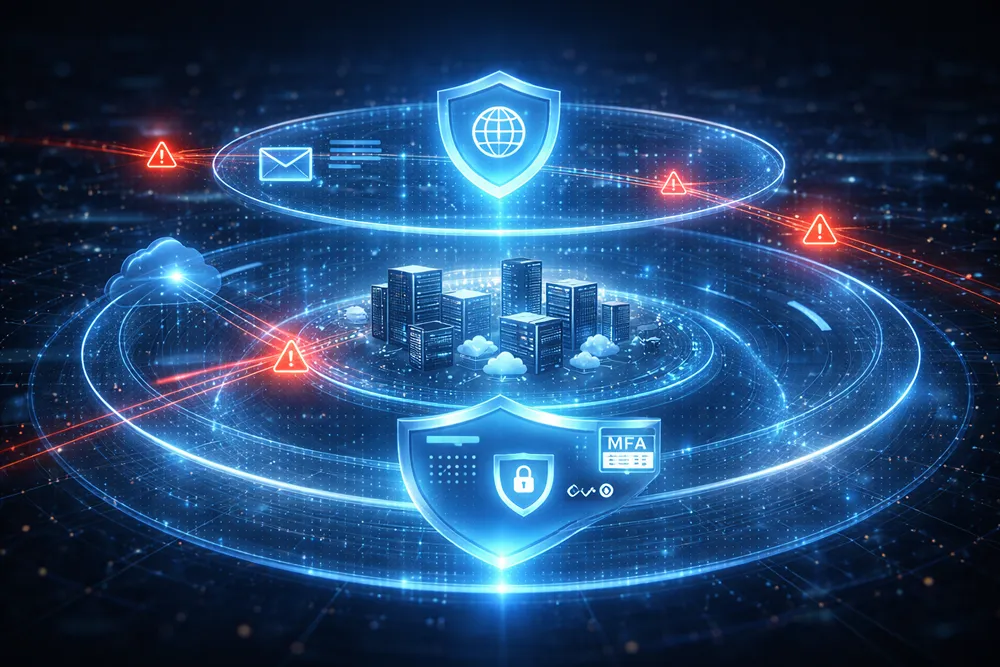
While employee awareness is essential, technical phishing protection tools provide crucial automated defenses that filter malicious content before it reaches users. A comprehensive security strategy layers multiple protective technologies to reduce phishing exposure and detect threats that bypass initial filters.
Email security gateways serve as the frontline defense against phishing, scanning inbound messages for known malicious indicators. Advanced solutions employ machine learning algorithms that analyze sender reputation, content patterns, link destinations, and attachment characteristics to identify phishing attempts. These systems quarantine suspicious messages, strip dangerous attachments, or add warning banners alerting recipients to external senders. According to Gartner, organizations using advanced email security solutions block approximately 99.5% of phishing emails before they reach user inboxes.
Web filtering and DNS-based protection prevent employees from accessing known phishing sites even if they click on a phishing link. These services maintain continuously updated databases of malicious domains and URLs, blocking connections in real-time. When an employee clicks a phishing link, the web filter intercepts the request and displays a warning page, preventing credential entry or malware download. This technology provides critical protection against zero-hour attacks where email filters haven't yet identified new phishing campaigns.
Multi-factor authentication (MFA) represents perhaps the most effective phishing protection tool because it renders stolen passwords insufficient for account access. Even if an employee falls victim to a phishing attempt and enters credentials on a fraudulent site, attackers cannot access accounts without the second authentication factor. Organizations should implement MFA universally across all systems, prioritizing cloud services, email accounts, VPNs, and administrative interfaces. Implementing strong authentication has been shown to prevent over 99% of automated account compromise attempts.
Endpoint detection and response (EDR) solutions provide protection when phishing emails deliver malware payloads. These tools monitor endpoint behavior for suspicious activities—unauthorized network connections, rapid file encryption, privilege escalation attempts—that indicate successful phishing attacks have deployed malicious software. Early detection enables rapid incident response that contains infections before they spread across the network or exfiltrate sensitive data.
How Does Security Awareness Training Build Effective Phishing Defense?
Security awareness training programs transform employees from security liabilities into active defenders who recognize and report phishing threats. Effective training goes beyond one-time presentations to establish ongoing education that adapts to evolving phishing techniques and reinforces critical security behaviors—and the difference between a training program that sticks and one that gets ignored usually comes down to who is running it.
Comprehensive training curriculum should cover the fundamentals of social engineering, explaining the psychological manipulation tactics attackers employ. When employees understand how phishing works at a psychological level—exploiting authority, urgency, fear, and trust—they develop healthier skepticism toward unsolicited communications. Training should present real-world examples of phishing campaigns that successfully compromised organizations, demonstrating the tangible consequences that include data breaches, financial losses, and operational disruptions.
Interactive learning methodologies prove more effective than passive presentations. Rather than simply lecturing about threats, security training should incorporate quizzes, scenario-based exercises, and hands-on activities where employees practice identifying phishing indicators. Video-based training that demonstrates how to inspect email headers, verify sender addresses, and safely check link destinations provides practical skills employees can immediately apply. Regular microlearning sessions—brief, focused training delivered monthly or quarterly—maintain awareness without overwhelming employees with lengthy security presentations. Our security awareness training programs are built around this cadence rather than a single annual session nobody remembers by March.
Role-specific training addresses the unique phishing risks different employees face. Finance personnel require focused awareness training on business email compromise schemes that impersonate executives requesting wire transfers. IT administrators need specialized training on technical support phishing that targets privileged credentials. Executives facing whaling attacks benefit from training on sophisticated social engineering that leverages publicly available information from social media and business profiles. Tailoring training to business needs and role-specific threats enhances relevance and improves retention.
Establishing clear reporting procedures empowers employees to contribute to organizational security. Training should emphasize that reporting suspicious emails strengthens defenses rather than indicating incompetence. Organizations should provide simple reporting mechanisms—dedicated email addresses, integrated reporting buttons in email clients, or security awareness platforms—that enable one-click phishing reporting. When security teams receive reports, they should acknowledge submissions promptly and provide feedback about whether reported items were legitimate threats, reinforcing the value of vigilance.
What Role Do Phishing Simulations Play in Strengthening Employee Readiness?
Phishing simulation exercises provide realistic training that tests employee responses under conditions mirroring actual attacks. Unlike theoretical training, simulated phishing tests measure behavioral responses and identify vulnerabilities requiring additional attention. These controlled exercises transform abstract knowledge into practical skill development that significantly reduces susceptibility to real phishing attempts.
Simulated phishing exercises begin with baseline assessments that establish current organizational vulnerability. Organizations send benign test emails mimicking common phishing tactics—password reset requests, package delivery notifications, or urgent messages from executives—and track who clicks links or submits credentials. Initial results often reveal sobering statistics, with click rates ranging from 20-40% in organizations without established awareness training programs. These metrics provide objective evidence justifying security investments and establishing benchmarks for measuring improvement.
Effective phishing simulations employ varied templates and techniques that reflect evolving attacker tactics. Rather than repeating identical tests, programs should rotate through different common phishing scenarios including spear phishing emails, vendor impersonation, credential harvesting pages, and malicious attachment delivery. Difficulty should increase progressively as employee awareness improves, introducing more sophisticated phishing attempts that challenge even security-conscious individuals. This variation prevents employees from simply memorizing specific indicators rather than developing transferable recognition skills.
Immediate teaching moments maximize simulation value. When employees click on a phishing link during testing, the redirect should lead to brief educational content explaining what indicators they missed and how to identify similar threats in the future. This just-in-time training capitalizes on the heightened attention that follows mistakes, converting failures into powerful learning experiences. However, organizations must balance education with empathy—punitive responses to simulation failures create hostile environments where employees hide mistakes rather than reporting actual threats.
Measuring and communicating progress demonstrates improvement and maintains engagement. Regular reporting on metrics like click rates, credential submission rates, and reporting rates shows employees that training and simulated phishing efforts produce measurable results. Celebrating improvements—highlighting departments with high reporting rates or significant reductions in click rates—reinforces positive security behaviors. Organizations should publish anonymized results that provide transparency without shaming individuals who fall victim to simulated attacks.
How Should Organizations Respond to Phishing Incidents Effectively?
Despite robust prevention strategies, phishing incidents will occasionally succeed. A well-defined incident response plan that enables rapid containment and remediation minimizes damage and accelerates recovery. Organizations must prepare their security team to respond to phishing with coordinated procedures that address both technical and human elements.
Immediate containment actions begin the moment a successful phishing attack is detected. If an employee reports clicking on a phishing link or submitting credentials, the security team should immediately reset affected passwords, revoke active sessions, and monitor accounts for suspicious activity. If malware was downloaded, the affected system should be isolated from the network to prevent lateral movement. Time is critical—attackers often act within hours of credential compromise to establish persistence, escalate privileges, or exfiltrate data.
Forensic investigation determines the attack's scope and identifies potential data exposure. Security teams should analyze email headers to identify the attack source, examine logs for signs of unauthorized access following credential compromise, and assess whether attackers accessed sensitive systems or data. Understanding the full extent of compromise informs notification obligations, remediation requirements, and preventive measures. Advanced attacks may require engaging cybersecurity service providers with specialized forensic capabilities.
Communication procedures ensure appropriate stakeholders receive timely, accurate information. Internal notification should alert relevant managers, legal counsel, and executive leadership about incident severity and potential business impact. If customer data or partner information was compromised, breach notification obligations may require communications to affected parties and regulatory authorities. Organizations should have pre-drafted communication templates that can be quickly customized to incident specifics, ensuring compliance with notification timelines while maintaining professional, transparent messaging.
Post-incident analysis transforms attacks into learning opportunities. After containing an incident, security teams should conduct root cause analysis examining how phishing succeeded despite existing defenses. Was it a novel technique that bypassed email filters? Did the employee lack specific awareness training addressing that phishing type? Were technical controls improperly configured? Insights from these analyses should inform updated prevention strategies, refined awareness training content, and enhanced technical controls. The feedback loop between incidents and prevention strategies continuously strengthens organizational security posture.
What Advanced Phishing Prevention Strategies Should Organizations Adopt?
As phishing techniques grow increasingly sophisticated, organizations must adopt advanced prevention strategies that go beyond basic email filtering and periodic training. These proactive security measures create defense-in-depth architectures that make successful phishing attacks significantly more difficult and less damaging.
Domain-based Message Authentication, Reporting, and Conformance (DMARC) policies prevent attackers from spoofing your organization's email domain in phishing campaigns. By implementing DMARC protocols alongside SPF and DKIM authentication, organizations ensure that emails claiming to originate from their domain actually come from authorized mail servers. This protects both external parties from phishing emails impersonating your organization and prevents attackers from sending internal phishing messages that appear to come from colleagues or executives.
Zero-trust network architecture minimizes damage when phishing successfully compromises credentials. Traditional network security assumes that users inside the network perimeter can be trusted. Zero-trust models require continuous authentication and authorization for every access request regardless of network location. This approach limits what compromised credentials can access, containing breaches and preventing the lateral movement that enables attackers to reach critical systems after initial phishing success.
Privileged access management (PAM) solutions protect high-value accounts that represent lucrative phishing targets. Administrative credentials with elevated privileges should be secured through dedicated PAM systems requiring additional authentication, session monitoring, and time-limited access grants. When attackers successfully phish standard employee credentials, PAM systems prevent privilege escalation that would otherwise enable system-wide compromise. Organizations should maintain strict separation between everyday user accounts and privileged accounts used for administrative functions.
Threat intelligence integration enhances phishing protection by incorporating external data about emerging campaigns, malicious infrastructure, and attacker tactics. Security services that aggregate intelligence from multiple organizations identify new phishing techniques as they emerge, enabling proactive defense updates before your organization is targeted. Integration with dark web monitoring services alerts security teams when employee credentials appear on underground marketplaces, enabling proactive password resets before stolen credentials are weaponized in subsequent attacks.
How Can Organizations Build a Lasting Culture of Security Awareness?
Technical tools and training programs provide necessary foundations, but sustainable phishing defense requires organizational culture where security becomes everyone's responsibility rather than solely IT's concern. Building this culture of security demands leadership commitment, positive reinforcement, and integration of security considerations into everyday business processes.
Executive sponsorship legitimizes security initiatives and demonstrates organizational priorities. When leadership actively participates in awareness training, discusses security in company communications, and allocates resources to protective measures, employees recognize security's importance. Executives should model secure behaviors—questioning suspicious emails, using strong passwords, enabling multi-factor authentication—that establish expectations throughout the organization. Leadership should also celebrate employees who report phishing attempts, treating reporting as a valuable contribution rather than an admission of near-failure.
Gamification and positive reinforcement make security awareness engaging rather than burdensome. Organizations can implement phishing awareness challenges where departments compete for the highest reporting rates or lowest click rates on simulated phishing tests. Recognition programs highlighting "security champions" who consistently demonstrate vigilant behavior create positive role models. Avoiding punitive responses to simulation failures while celebrating success creates psychological safety that encourages reporting and questions rather than hiding mistakes from fear of consequences.
Integration with onboarding processes ensures new employees receive security training before accessing systems. New hire orientation should include phishing awareness as a core component alongside other operational training. Establishing security expectations from day one, combined with role-specific guidance on protecting sensitive information relevant to their position, creates proper security habits before bad practices develop. Regular refresher training throughout the employment lifecycle maintains awareness as threats evolve.
Measurement and transparency demonstrate progress while identifying areas requiring additional focus. Organizations should regularly publish security metrics including phishing click rates, reporting rates, training completion percentages, and incident trends. Transparent communication about both successes and ongoing challenges builds trust and demonstrates that security receives continuous attention. When employees see measurable improvement resulting from their vigilance, they maintain engagement with awareness training and security protocols.
What Specific Considerations Matter for Protecting Small Businesses from Phishing?
Small businesses face unique phishing challenges that differ from enterprise environments. Limited IT resources, fewer dedicated security personnel, and smaller training budgets require efficient approaches that maximize protection within resource constraints. However, small businesses can implement highly effective phishing defense by focusing on high-impact measures that safeguard your business without overwhelming limited teams.
Cloud-based email security services provide enterprise-grade phishing protection without requiring on-premises infrastructure or dedicated security staff. These managed service offerings include automated phishing detection, malicious link rewriting, attachment sandboxing, and user awareness tools at predictable monthly costs scalable to employee count. Small businesses gain access to sophisticated protection and continuous updates without needing in-house expertise to manage complex security tools.
Affordable security awareness training platforms democratize employee education previously available only to large enterprises. Numerous vendors offer subscription-based training services with pre-built content libraries covering all common phishing techniques, automated simulated phishing campaign management, and progress tracking dashboards. These platforms enable small businesses to implement comprehensive awareness training programs that would be prohibitively expensive to develop internally. Many providers offer free trial periods allowing evaluation before financial commitment.
Managed security service providers (MSSPs) extend the security capabilities of small businesses through outsourced expertise. Rather than hiring full-time security personnel, small organizations can engage MSSPs for specific services including email security monitoring, incident response support, security awareness training program management, and phishing threat intelligence. This approach provides access to experienced security professionals while controlling costs through service-based pricing rather than full-time salaries and benefits.
Small businesses should prioritize foundational security measures with disproportionate impact. Multi-factor authentication across all cloud services and email accounts prevents the vast majority of credential phishing consequences. Regular backup procedures with offline or cloud-based storage ensure ransomware delivered through phishing doesn't cause catastrophic data loss. Email authentication protocols (SPF, DKIM, DMARC) prevent domain spoofing. Strong password policies enforced through password managers reduce credential reuse risks. These fundamental security best practices provide substantial protection without requiring extensive resources or specialized expertise.
What Emerging Phishing Trends Should Organizations Monitor?
The security landscape continues evolving as attackers adopt new technologies and tactics that bypass traditional defenses. Organizations must remain vigilant about emerging phishing trends that represent tomorrow's threats, adapting prevention strategies proactively rather than reactively after exploitation.
Artificial intelligence-powered phishing uses machine learning to craft highly convincing messages that mimic writing styles, reference contextually relevant information, and adapt to victim responses. AI tools enable attackers to generate grammatically perfect messages in any language, eliminating the typos and awkward phrasing that previously signaled phishing attempts. Large language models allow real-time conversation with victims, making voice phishing and chat-based social engineering dramatically more convincing. Organizations must adapt training to address AI-generated phishing that lacks traditional error indicators.
Multi-factor authentication bypass techniques represent growing threats as MFA adoption increases. Attackers employ real-time phishing proxy sites that capture both credentials and MFA tokens, immediately using them to authenticate against legitimate services before tokens expire. Push notification fatigue attacks bombard victims with repeated MFA approval requests hoping they'll eventually approve access just to stop notifications. Organizations should implement phishing-resistant authentication methods like FIDO2 hardware tokens and risk-based authentication that considers contextual factors beyond credentials and tokens.
Business collaboration platform exploitation targets tools like Microsoft Teams, Slack, and other messaging services that employees inherently trust more than email. Attackers compromise or impersonate accounts on these platforms to deliver phishing messages that recipients view as internal communications. The informal, rapid nature of chat-based communication reduces scrutiny compared to email, increasing phishing success rates. Security training must expand beyond email phishing to address threats across all communication channels employees use daily.
Deepfake technology enables video and audio impersonation that makes vishing and video-based social engineering extraordinarily convincing. Attackers can clone executive voices or create fake video calls appearing to show company leaders requesting sensitive actions. As deepfake technology becomes increasingly accessible and realistic, organizations need awareness training addressing this emerging threat and verification procedures for high-risk requests regardless of apparent source authenticity. Time-sensitive decisions requiring unusual actions should follow established verification protocols even when requests appear to come from trusted sources.
Key Takeaways: Essential Points for Comprehensive Phishing Protection
- Phishing remains the most prevalent cybersecurity threat affecting organizations of all sizes, exploiting human psychology to bypass technical defenses and resulting in billions of dollars in annual losses through data breaches, financial fraud, and operational disruption
- Common types of phishing attacks include email phishing, spear phishing, smishing, vishing, and clone phishing—each requiring specific awareness and technical countermeasures tailored to the communication channels and tactics attackers employ
- Effective employee training combines theoretical education with practical skills including sender verification, content analysis, link inspection, and attachment scrutiny that enable workers to spot phishing attempts and report suspicious communications
- Technical phishing protection tools provide automated defenses through email security gateways, web filtering, multi-factor authentication, and endpoint detection that filter malicious content before it reaches users and limit damage when phishing succeeds
- The right training program is the difference-maker—look for a security awareness training partner who delivers ongoing, role-specific education and clear reporting metrics rather than a one-time slideshow nobody remembers by the next quarter
- Phishing simulation exercises test employee readiness through realistic attack scenarios that identify vulnerabilities, provide immediate teaching moments, and measure progress through metrics demonstrating improved security behaviors over time
- Incident response procedures enable rapid containment when phishing attacks succeed, including immediate credential resets, system isolation, forensic investigation, stakeholder communication, and post-incident analysis that transforms attacks into prevention improvements
- Advanced prevention strategies strengthen defense-in-depth through DMARC implementation, zero-trust architecture, privileged access management, and threat intelligence integration that make successful phishing significantly more difficult and less damaging
- Small businesses can implement effective phishing protection through cloud-based security services, affordable training platforms, managed security providers, and prioritized foundational measures that provide substantial protection within resource constraints
- Emerging phishing trends including AI-generated attacks, MFA bypass techniques, collaboration platform exploitation, and deepfake impersonation require ongoing adaptation of training content and security controls to address evolving threats
Building comprehensive phishing defense requires sustained commitment to both technical controls and human factors. By implementing layered security measures, partnering with the right security awareness training provider, conducting regular simulated phishing exercises, and fostering organizational culture that values security vigilance, organizations can dramatically reduce their exposure to these pervasive threats and protect your business from the devastating consequences of successful phishing attacks.
Ready to find out how your team would actually handle a phishing attempt?
Talk to VisioneerIT's security awareness team about building a program that changes behavior, not just checks a compliance box.

%402x.svg)
%402x.svg)

