



.svg.png)

Most of what gets written about artificial intelligence in manufacturing is aimed at companies with a hundred plants and a data science department. If you run three facilities and your IT team is four people, that advice is worse than useless, because it describes a starting position you do not have.
Here is the finding that should change how you think about this. MIT's research into enterprise AI found that mid-market companies reach full implementation in roughly 90 days, while large enterprises average nine months. You are not behind the giants. You are structurally faster than them, and this article is about the loop that converts that advantage into productivity rather than another stalled pilot. It covers why implementing AI usually fails, which AI use cases actually pay in manufacturing operations, how to sequence deployment, and what governance looks like when you do not have a governance department.
Why do most AI initiatives produce nothing?
Because the pilot was designed to demonstrate rather than to learn. MIT's Project NANDA studied AI deployment across firms of every size and found that despite roughly $30 to $40 billion in spending, 95% of generative AI pilots delivered no measurable impact on profit and loss. Only about 5% produced real value. The funnel is brutal: most organisations explore AI solutions, many evaluate them, a fifth run pilots, and one in twenty reaches production with something that moves a number. That is the measured impact of AI spend to date.
The cause is not model quality. MIT calls it the learning gap: the systems companies deploy cannot retain feedback, adapt to context, or improve with use. A system that answers the same question the same wrong way in month six as it did in week one is a demo, not an operational asset. That is a design problem in how the AI system was integrated, not evidence that the technology does not work.
The second cause is misallocation. AI budgets skew heavily toward sales and marketing, which is visible, while operations and back office work delivers better returns and gets less money. For a manufacturer that finding is unusually actionable, because operations is the part you already understand and measure. The benefits of AI in manufacturing are concentrated exactly where the money is not going, and that is as true of AI in the manufacturing industry generally as it is on your own floor.
What is the productivity loop, and why does it matter more than the tool?
The loop has four steps and every successful AI implementation runs all four. Measure the baseline before anything changes. Deploy against one narrow decision. Capture what the system got wrong and feed it back. Then widen the scope only once the loop is closing.
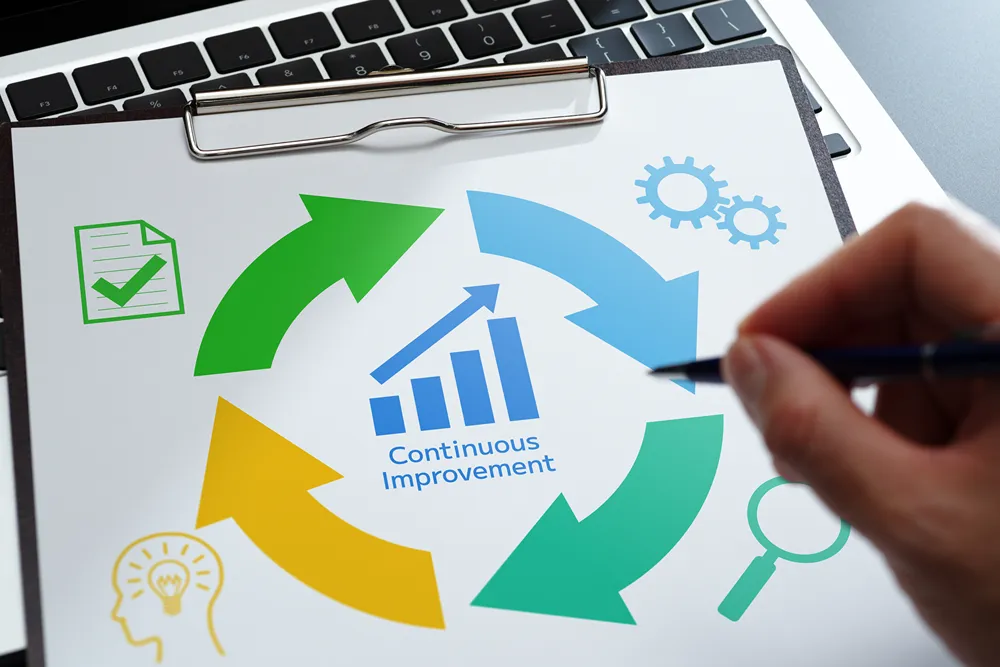
Skip any step and you get the 95% outcome. Skip the baseline and you cannot prove productivity gains afterwards, or show any effects on productivity at all. Skip the narrow scope and you are debugging four things at once. Skip the feedback capture and you have bought the learning gap MIT describes. Skip the discipline about widening and you scale a system nobody has validated.
What makes this a loop rather than a project is that the feedback path is permanent infrastructure. Operators need somewhere to flag a bad prediction, that signal has to reach whoever tunes the model, and the correction has to show up in the next cycle. Most manufacturing companies build the prediction and skip the return path, which is why year two looks exactly like year one.
Which applications of AI in manufacturing actually pay?
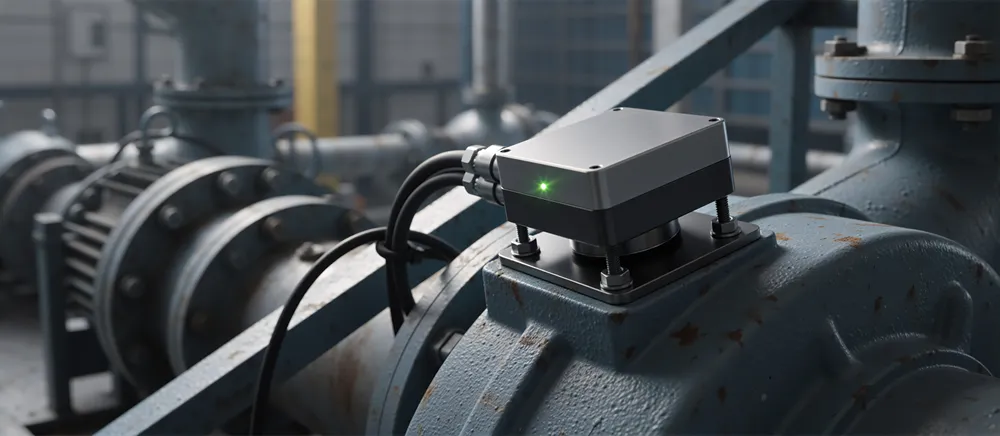
Start where you already have data and a measurable outcome. Predictive maintenance is the obvious candidate because sensor histories exist, failures are expensive, and the use of AI in manufacturing maintenance measurably helps improve productivity on the line. Visual quality inspection is the second, because cameras are cheap, AI models for defect detection are mature, and defect rates are already tracked. Both are narrow enough to validate in a quarter.
After those, the AI applications in manufacturing that pay cluster around scheduling and knowledge. Production scheduling under changing constraints is a genuine optimisation problem that AI algorithms handle well. And capturing institutional knowledge from retiring operators, turning decades of undocumented judgement into something searchable, is one of the highest-value uses of AI in manufacturing that almost nobody prioritises. Basic automation of reporting sits alongside it.
What to avoid early: anything customer-facing, anything touching safety-critical control loops without a human in the path, and anything requiring data you do not currently collect. The first is reputational risk, the second is a regulatory and insurance problem, and the third is a data project pretending to be an AI project.
How do autonomous agents change manufacturing operations?
It moves from prediction to action. A predictive system tells you a bearing will fail in three weeks. An agent drafts the work order, checks parts inventory, and proposes a technician schedule. Deloitte's 2026 outlook for manufacturers describes autonomous agents as poised to elevate smart manufacturing and operations, with uses including autonomously generated shift handover reports and identifying alternative suppliers during disruption.
The honest framing is that this is augmentation, not replacement. Deloitte's analysis holds that more than 81% of task hours in manufacturing are expected to remain human-driven. Anyone selling you AI replacing your workforce is selling something. What actually happens is that artificial intelligence does the retrieval, the drafting, and the monitoring, and your people do the judgement.
Agentic capability also raises the integration bar sharply. An agent that only reads is a reporting tool. An agent that writes to your ERP or MES needs permissions, audit trails, and a rollback path. If your systems are not integrated well enough for a person to trust the data, they are not ready for an agent to act on it.
What does AI adoption in manufacturing require from your data?
Less than vendors imply, and more than optimists hope. You do not need a data lake. You do need the specific data for the specific decision, at sufficient quality and history, and you need to know where it lives. Most manufacturing facilities already collect more than they realise across sensors, quality records, and maintenance logs.
The realistic blocker is not volume, it is context. A vibration reading is meaningless without knowing which machine, running which product, at which line speed, maintained when. That contextual linkage is usually the real work when deploying AI tools, and it is the most common of the AI implementation challenges we see once teams start using AI tools on plant data, and it is why teams that already run a digital twin have a head start: they have done the modelling already.
Budget accordingly. In most mid-market AI projects the data preparation is the majority of the effort and the model is a minority. If a vendor's proposal inverts that ratio, they are either using data you have not seen or underestimating the work.
Where does OT security fit into AI deployment?
Directly in the middle of it, and it is the part most AI conversations skip. Connecting plant-floor systems to anything that reasons about them means widening the boundary between operational technology and IT. That is the same convergence problem that has been causing incidents in industrial environments for a decade, and adding AI does not simplify it.

Treat network segmentation, read-only access by default, and monitored data paths as prerequisites rather than follow-up work before you integrate AI with anything on the plant floor. An AI platform pulling live data from a PLC network is a new path into the plant, and it deserves the same scrutiny as any other. We covered the underlying issue in our guide to IT/OT convergence and cybersecurity, and the manufacturing-specific version is in our Industry 4.0 guide. Workflow-level changes belong in the same plan, which is where our workflow and process automation work usually intersects.
There is also a NIST angle worth tracking. NIST's AI Risk Management Framework is the reference most organisations build controls against, and in April 2026 NIST released a concept note for an AI RMF profile covering trustworthy AI in critical infrastructure. If your plant sits anywhere near that definition, that profile is worth watching before you commit to an architecture.
AI pilots that never reach production waste budget. We take one high-value use case from idea to secure, measured deployment. Book an AI readiness session →
What about the AI your people are already using?
They are using it, and you should assume so. MIT's research found that while only around 40% of companies had bought official language model subscriptions, workers at over 90% of firms surveyed reported regular use of personal assistants for work. That gap is what the report calls the shadow AI economy, and in many cases the unsanctioned tools outperform the sanctioned ones.
The instinct is to ban it. The better response is to notice what this AI usage tells you. Shadow usage is free market research about which tasks your people find painful and which AI capabilities actually help. A maintenance planner pasting fault descriptions into a chatbot is telling you precisely where your official system should be pointed.
Then bring it inside a boundary. Sanction a tool, be explicit about what data may and may not go into it, and train people on where it is safe. That is an organizational AI question rather than a technical one. That is cheaper than enforcement and it converts a governance risk into a signal. Our AI governance and compliance work usually starts by mapping actual AI utilization rather than policy, because the two rarely match.
How should mid-market manufacturers sequence AI implementation?
Ninety days for the first loop, and mean it. Weeks one to three: pick one decision, baseline it, confirm the data exists. Weeks four to eight: deploy against that decision with a human reviewing every output. Weeks nine to twelve: measure against the baseline, capture the failure modes, and decide whether to widen, adjust, or stop.
Stopping has to be a real option or the exercise is theatre. A pilot that does not clear its baseline in one cycle should be killed, and killing it quickly is what funds the next attempt. Large organisations struggle here because a cancelled programme is a career problem; mid-market teams can just move on, which is a large part of why they are faster.
Then repeat with a second decision while the first accumulates feedback. Deloitte's manufacturing lead has made the point that vendors need modular solutions built for midmarket manufacturers rather than only for enterprise players, and the same logic applies to how you buy: prefer things you can adopt one at a time over comprehensive AI transformation programmes.
Build, buy, or partner?
Buy or partner, in almost every case. MIT's data is unusually clear here: tools built by external vendors succeeded roughly twice as often as internal builds. Custom AI work and bespoke builds from AI startups make sense when the process being modelled is genuinely proprietary, and almost never when the target is predictive maintenance or visual inspection, where mature products exist.
The trap in buying is treating it like software procurement. The report's framing is that successful buyers behave more like clients of an outsourcing relationship than shoppers for a SaaS licence: they demand customisation, insist on integration into their actual workflow, and measure operational outcomes rather than usage. Evaluating AI vendors on feature lists produces the pilots that stall, whatever their AI technologies look like in a demo.
AI talent is the other consideration. You do not need to hire data scientists to run this loop. You need someone who understands your process well enough to define the decision, and a partner who handles the modelling. Trying to build an internal AI capability before you have a working pilot is how mid-market budgets disappear.
How do you measure whether it worked?
Against the baseline you captured, in operational units, not in AI metrics. Model accuracy is a diagnostic, not a business result. The number that matters is whether you reduce downtime hours, scrap rate, changeover time, or overtime spend. If you cannot express the benefit in one of those, you have not finished defining the problem.
Then account honestly for total cost. Licence plus integration plus the internal hours spent maintaining the data path plus retraining as the process drifts. Efficiency gains and gains from AI are real but they are not free, and a productivity improvement that requires a full-time person to sustain is a different proposition from one that runs itself.
Report it the way you would report any capital decision. The value of AI in a manufacturing business is not that it is AI; it is that a specific decision got faster, cheaper, or more accurate by a measurable amount. Executives who frame it that way keep their funding, and the ones who present adoption statistics do not. A one-page analysis of AI spend against operational outcomes is worth more than any AI strategy document.
What does the future of AI in manufacturing look like from here?
More capable systems arriving faster than most plants can absorb them, which makes absorption capacity the real constraint rather than technology access. Global AI investment keeps climbing, and investing in AI no longer differentiates anyone because access to AI is close to universal. Investment in AI capability is table stakes. What separates plants now is whether they have a working loop.
Expect the integration of AI into existing plant systems to get easier as vendors build for mid-market rather than only for enterprise, and expect agentic behaviour to become standard in tools you already own rather than something you buy separately. That argues for keeping your architecture flexible instead of committing to one comprehensive platform. Effective AI manufacturing work will look less like a transformation and more like a habit.
The manufacturers who benefit most over the next three years will not be the ones who invested earliest. They will be the ones who built the habit of running a decision through a measured loop, because that habit transfers to every new capability that arrives. We go deeper on autonomous systems in our companion pillar, Agentic AI for Enterprise: Where It Works, Where It Fails, Where to Start, and on the maintenance stack in Predictive Maintenance With AI: The Stack That Actually Pays Back.
Find the use case worth starting with
Our AI Use-Case Prioritization Workshop works through your operations with your team and returns a ranked shortlist: which decisions have the data, which have a measurable baseline, which can close a loop in 90 days, and what each would cost. You leave with a sequence, not a strategy deck.
Firms that have adopted AI successfully treat it as an operating discipline. VisioneerIT's AI adoption practice works with manufacturers who want the operational result rather than the pilot, and our framework guide for governing AI and NIST AI RMF walkthrough cover the control side in detail.
Key things to remember
- MIT found 95% of generative AI pilots produced no measurable P&L impact, and the cause was the learning gap rather than model quality. Systems that cannot absorb feedback do not improve.
- Mid-market companies reach full implementation in about 90 days against nine months for large enterprises. Speed is your structural advantage; use it.
- Run the loop: baseline, narrow deployment, feedback capture, then widen. Skipping any step produces the common failure.
- Money follows visibility into sales and marketing while operations delivers better returns. For a manufacturer that mismatch is an opportunity.
- Start with predictive maintenance and visual inspection. The data exists, the outcome is countable, and both validate inside a quarter.
- Data context, not data volume, is the real blocker. Expect preparation to be most of the effort.
- Agentic systems act rather than advise, which raises the integration and permissions bar. Deloitte still expects over 81% of manufacturing task hours to remain human-driven.
- Treat OT security as a prerequisite. Connecting plant data to a reasoning system widens your boundary.
- Your people already use AI. Shadow usage is free research into which tasks hurt; sanction a tool and point it there.
- Buy or partner rather than build. External tools succeeded roughly twice as often, and behave like a client rather than a SaaS shopper when you buy.

%402x.svg)
%402x.svg)

