



.svg.png)

Most brand protection programs were built around a removal queue. Someone finds a bad listing, someone files a notice, the offer disappears, and the number in the quarterly deck goes up. That model still works, and it is no longer sufficient, because the operators attacking your brand now build faster than your queue clears.
This is a rewrite of our original guide, updated for what actually changed. It covers the trends reshaping enterprise programs, what the counterfeit figures really say once you read the methodology, where AI helps and where it is oversold, and how domain hygiene, registered marks, and product authentication belong in one framework instead of three disconnected budgets. Written for brand owners and marketing leaders who have to defend the spend.
What do brand protection strategies actually cover in 2026?
Brand protection strategies are the controls that keep your name, marks, products, and digital presence from being used by people with no right to them. In practice that spans four areas: physical goods, online offers, web addresses, and social identity. Most programs cover one or two well and treat the rest as somebody else's problem.

They belong together because the other side does not respect the boundary. A single operation will register a lookalike address, stand up a storefront, buy ads against your trademark, seed fake social accounts to look credible, and fulfil orders with knockoff stock. Removing one product page leaves the network intact.
What changes when you run it as one program is where the money goes. Discovery stops being the bottleneck and enforcement becomes it. Nearly every global brand we work with can find more infringement than it can act on, so the real question is not how to see more but how to choose what is worth pursuing. Our brand security practice starts there rather than with a monitoring feed.
Which key trends are reshaping enterprise brand protection?
Four things are genuinely different from the version of this guide we published a few years ago. Generative tools collapsed the cost of producing convincing imitations, from product photography to storefront copy to review text. Social commerce moved the point of sale inside platforms never built for rights enforcement. Regulatory pressure on sellers got stricter in the EU. And vendor consolidation reshaped the tooling market.
That last one changes procurement. Each new entrant leads with AI-driven discovery rather than enforcement throughput, so when you evaluate platforms, ask what your industry peers actually achieved in removal rates and turnaround rather than what the demo finds.
The trend getting least attention is that brand abuse became a security problem rather than a legal one. Impostor sites are used for fraud against your customers. Fraudulent accounts are used to move money. A program reporting into legal alone will keep treating those as trademark matters when the harm is operational, and that mismatch quietly undermines the case for funding it properly.
How big is the counterfeit problem, really?
You will meet two very different numbers, and knowing which is which will save you an awkward board meeting. The rigorous one comes from customs seizure data: the OECD and EUIPO estimate cross-border trade in counterfeit goods at roughly USD 467 billion in 2021, about 2.3% of global trade. Within the EU, the share ran to about 4.7% of imports, with clothing, footwear and leather goods making up most seizures.
The much larger figure answers a different question. Work commissioned through the International Chamber of Commerce modelled total economic and social impact, adding domestic production, digital piracy, lost tax revenue and displaced employment, and projected a drag of several trillion annually on the world economy. Both are defensible. They measure different things, and quoting the larger one as if it were traded volume is the fastest way to lose a CFO.
For your own comprehensive analysis, neither matters as much as your own baseline. Sample your top categories across two or three sales channels, count what you find, and estimate displaced revenue from that. A measurable internal number beats a global statistic in every budget conversation you will have.
How is AI changing detection and enforcement?
The honest answer is that AI transformed detection and barely touched enforcement. Machine learning models match product images, cluster seller accounts by behavioural fingerprint, and surface counterfeit listings at a volume no human review team could reach. Deploying AI against a high-volume problem is the only economic way to cover it.

What AI has not solved is the slow part. A platform still has to accept the notice, a person still adjudicates edge cases, and the seller re-lists under a new handle within hours. The removal timeline has barely moved, while the attacker side of the equation got faster. Automation compresses discovery from weeks to minutes and leaves removal roughly where it was. Anyone who bought AI-powered threat detection expecting end-to-end relief was sold half a product.
Where it does pay off is prioritisation. Score findings by revenue exposure and consumer risk, push the high-value and high-risk cases through enforcement, and let the long tail accumulate for a bulk action. That granular, data-driven triage separates a program with real ROI from one producing activity reports. It runs the other way too: the same generative tools are available to the other side, so treat any advancement in your stack as temporary advantage rather than a moat.
What role do marketplaces and platform takedowns play?
Marketplaces are still where most volume converts to revenue, and where enforcement is cheapest per action. Every major platform runs a rights-holder program with bulk submission, and the difference between brands getting fast removals and brands that are not is almost always administrative: complete records, registered marks, a consistent submitter.
Removal programs work as a rhythm rather than a campaign. Weekly submission with clean evidence produces better turnaround than a quarterly sweep of ten thousand offers, because trust scores reward consistency. Treat each action as a data point as well; the same seller network resurfacing across three marketplaces tells you where to spend legal effort.
The gap is everything outside the walled gardens. Social commerce, messaging apps, and independent storefronts sit beyond most rights-holder tooling, and diversion through authorised channels never registers as infringement at all. Online monitoring has to reach past the platforms with convenient forms, which is where dark web monitoring and open-source collection earn their place, a subject we go deeper on in our guide to dark web monitoring.
Why do domains belong in your brand protection program?
Because an impostor web address is the cheapest attack surface anyone has against you, and internally it usually belongs to nobody. Marketing registers campaign sites, IT holds the registrar and registry relationships, legal handles disputes, and no one maintains the portfolio. The unauthorized registration that will be used against your customers next quarter costs under twenty dollars.

Good registration hygiene is unglamorous and cheap relative to what it prevents. Consolidate registrations with one corporate registrar, lock the records, watch new registrations against your marks in real-time, and pre-register the obvious variants in markets where you sell. Registry-level monitoring catches the pattern early, and early is the only point at which removal is simple.
This is also where brand work connects to security in a way boards understand. A site registered to impersonate you is a fraud platform aimed at people who trust you. The FBI's 2025 Internet Crime Report logged nearly $21 billion in reported losses, and impersonation of trusted institutions runs through a large share of it. Our website protection services work sits on this seam, and the customer-facing half is covered in our phishing protection guide.
How does trademark protection fit with monitoring?
Registered rights make everything else enforceable. Platform programs, registrar disputes, and customs recordation all key off a registration, and a brand operating on common-law rights alone will lose arguments it should win. If you sell in a market, register there, and register the marks people actually search rather than only the corporate entity name.
Registration data and monitoring should share one record. When a match surfaces, the analyst needs to know immediately whether the mark is registered in that jurisdiction, what classes it covers, and whether prior action exists against that seller. Programs keeping the legal record in one system and the analytics in another spend their time reconciling instead of enforcing.
Run an audit of the portfolio once a year against where the business actually sells now. Multinational brands drift. New markets get entered, old registrations lapse, product lines get renamed, and the gap between your trademark position and your commercial footprint widens until someone tries to enforce and cannot.
What do authentication and monitoring add for physical goods?
Authentication is the control that works when discovery fails. Serialised codes, tamper-evident security labels, and covert markers let a distributor, a customs officer, or a customer confirm an item is genuine without your involvement. That matters most where an imitation is a safety problem rather than a revenue problem.
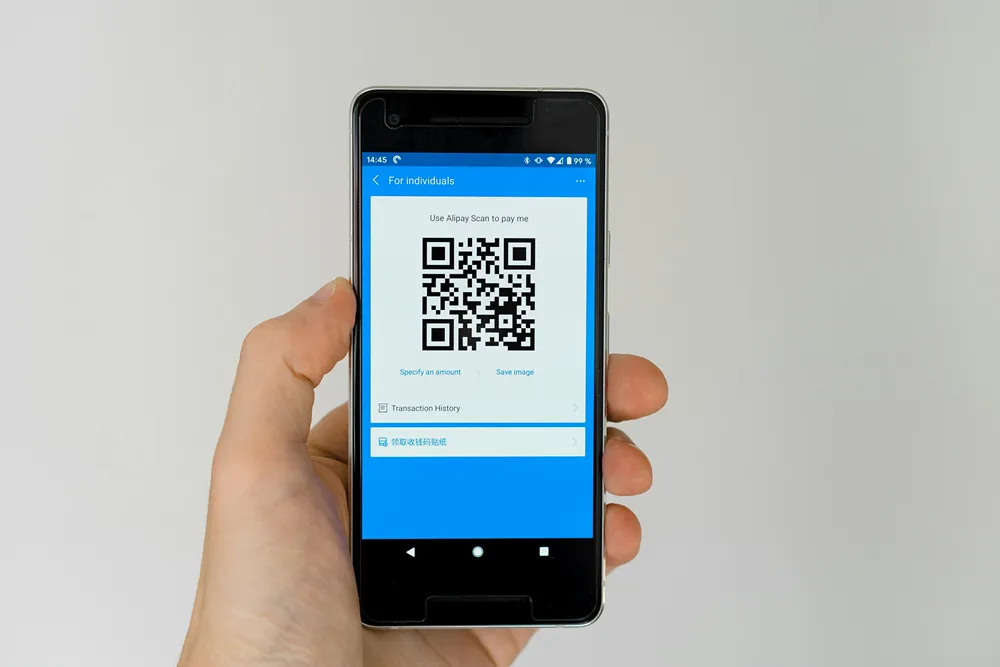
The provenance dimension is traceability. If you can tell where a unit was made, shipped, and sold, you can separate a counterfeit from a genuine unit diverted into the grey market, and those need completely different responses. The provenance discipline in NIST's supply chain risk management guidance was written for technology components, but the logic transfers to any product where origin has to be proven rather than assumed.
Consumer identity verification closes the loop. A scan-to-verify code turns authentication into consumer engagement: the customer confirms the item, you learn where genuine goods are surfacing, and brand trust gets reinforced at the moment of doubt. Few brands use that data, and it is some of the best information you will ever get about diversion.
How do privacy regulations shape brand protection work?
Enforcement runs on personal data. Seller identities, purchase records, IP addresses, and test-buy details all fall under data protection rules, and privacy regulations have tightened around exactly the collection practices investigators rely on. Programs built before that shift often hold evidence they can no longer lawfully retain.
Build the constraint in rather than around it. Define what you collect, why, how long you hold it, and who can see it, then have counsel sign the retention schedule. It is easier than it sounds, and it removes the most common reason enforcement stalls: evidence that cannot be used because of how it was gathered.
There is an upside on the security side. The same discipline that keeps investigations lawful makes brand work legible as enterprise risk, which is what gets it funded alongside cyber programs rather than out of the marketing budget. Third-party investigators need the same rules written into their contracts.
How do you measure ROI on brand protection programs?
Stop counting removals. Volume measures your tooling, not your outcome, and a rising count often means the problem is growing faster than you are. Measure recovered revenue, enforcement costs per action, response times from notice to removal, and the recidivism rate of sellers you have already actioned.
The metric most brands ignore is repeat offender rate. If the same networks return every quarter, your enforcement is a maintenance cost rather than a deterrent, and the money is better spent on fewer legal actions with real consequences. Threat intelligence that maps seller networks is what makes that shift possible.
Report it as risk, not as marketing performance. Brand integrity, consumer trust, and the cost of brand misuse belong in the same conversation as other enterprise exposures, and framing it that way is what redefines it from a line item into a program. The board-level version sits in our RepSec pillar, Reputational Security 101: What Boards Are Not Asking About Executive Digital Exposure, and the reputational case is made in our piece on why corporate reputation is an asset worth protecting.
What does a practical framework look like?
Four stages, run continuously rather than as a project. Establish the record: registered marks, owned web properties, authorised sellers, and product identifiers, in one place with an owner. Monitor across sales channels, registrations, social, and the open web, tuned to your categories rather than generic keyword alerting.
Then enforce on a triage model, with defined thresholds for bulk removal, escalated platform action, registrar dispute, and legal referral. Finally, review quarterly against the metrics above and feed what you learn back into monitoring. That is the whole thing, and its value is that every stage has a named owner and a threshold, which is what stops the program drifting back into a queue.
One caution as you build it. Do not let a single stage become the program. Brands that over-invest in discovery drown in findings; brands that over-invest in legal spend heavily on a handful of cases while volume runs unchecked. The balance point moves with your category, so revisit it, and make sure one stakeholder owns the whole chain rather than a stage each. Working proactively is mostly a question of who is accountable, not which tool you bought.
Find out where your brand is exposed
Our brand exposure Self-Check gives marketing and security leads a structured read on what is out there: impostor registrations, impostor offers on the channels that matter to you, imitation accounts using your marks, and where your trademark coverage leaves gaps. It takes an afternoon and it usually finds something.
VisioneerIT runs this as one program rather than three, which is why our complete brand protection guide for 2026 and our cybersecurity solutions practice share the same intelligence. If you want a straight read on where you stand, we can give you one.
Key things to remember
- The other side operates as a network, so a program that only clears one sales channel removes a node and leaves the operation running.
- Know your two numbers. Roughly $467 billion is customs-measured cross-border trade in illicit goods; the larger modelled figure includes domestic production and digital piracy. They answer different questions.
- AI transformed discovery and barely moved enforcement. Buy it for triage and coverage, not for end-to-end relief, and expect the other side to hold the same tools.
- Consistency beats volume with platforms. Weekly clean submissions get better removal rates than quarterly sweeps.
- Consolidating your registrars is the cheapest control you are probably not running. Consolidate the registrar, lock records, watch new registrations, pre-register the obvious variants.
- Registered rights make enforcement possible. Review the portfolio annually against where the business sells today, not where it sold when the marks were filed.
- For physical goods, authentication and provenance data separate a counterfeit from a diverted genuine unit, and those need different responses.
- Build privacy compliance into evidence handling from the start. Unusable evidence is the most common reason enforcement stalls.
- Measure recovered revenue, cost per action, notice-to-removal speed, and repeat offender rate. A rising removal count is not a win.

%402x.svg)
%402x.svg)

