discover Our services
Closed Menu
Home>Blogs>Technology>Digital Twin and Predictive Maintenance: Transforming Maintenance Strategies with Digital Twin Technology
Digital Twin Technology for Predictive Maintenance

Digital Twin and Predictive Maintenance: Transforming Maintenance Strategies with Digital Twin Technology

Lorem ipsum dolor sit amet, consectetur adipiscing elit. Suspendisse varius enim in eros elementum tristique. Duis cursus, mi quis viverra ornare, eros dolor interdum nulla, ut commodo diam libero vitae erat. Aenean faucibus nibh et justo cursus id rutrum lorem imperdiet. Nunc ut sem vitae risus tristique posuere.

The convergence of digital twin and predictive maintenance represents a paradigm shift in how organizations manage assets, reduce downtime, and optimize operational performance. Digital twins in predictive maintenance create virtual replicas of physical equipment, enabling maintenance teams to monitor performance, predict maintenance needs, and prevent failures before they occur. This revolutionary approach moves organizations away from reactive maintenance and costly emergency repairs toward data-driven, proactive maintenance strategies that maximize asset lifespan and minimize operational disruptions. Whether you manage manufacturing facilities, infrastructure, building systems, or city operations, this comprehensive overview of predictive maintenance and digital twin integration will demonstrate how to use digital twin technology to transform your maintenance system and achieve unprecedented operational efficiency with digital twin solutions. Explore how digital twins are reshaping asset management and delivering measurable results across industries.

What Is Digital Twin for Predictive Maintenance?

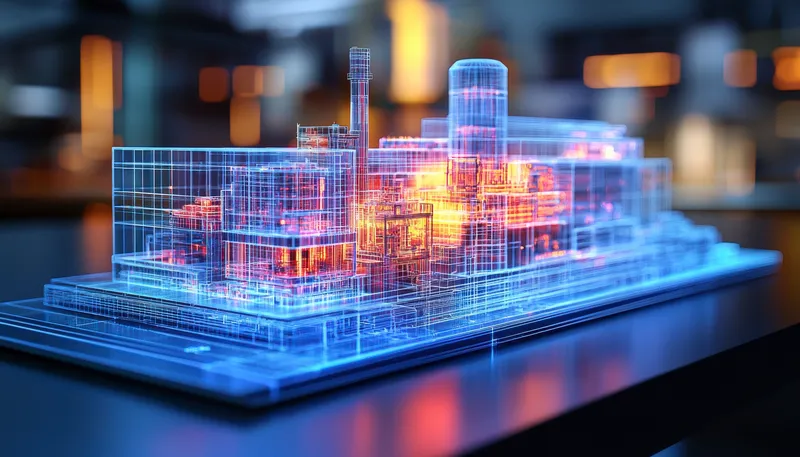
A digital twin is a virtual representation of physical assets that continuously updates based on real-time data from sensors, IoT devices, and operational systems. In the context of predictive maintenance and digital twin integration, this digital model serves as a dynamic testing environment where maintenance teams can simulate operating conditions, analyze performance patterns, and identify potential failures before they impact operations. The digital twin for predictive maintenance combines historical performance data with current operational metrics to create accurate predictions about equipment health and maintenance needs.

Digital twin technology enables organizations to move beyond traditional maintenance approaches that rely on fixed schedules or equipment failures. Instead of performing preventive maintenance based solely on calendar intervals, maintenance based on digital twin insights considers actual equipment condition, usage patterns, environmental factors, and performance degradation. This data-driven digital twin approach optimizes maintenance schedules, reduces unnecessary interventions, and ensures timely maintenance when equipment truly requires attention.

The implementation of digital twin technology for predictive purposes creates a feedback loop where sensor data from physical assets continuously refines the virtual model's accuracy. As the digital twin systems process more information over time, their predictive capabilities improve through machine learning algorithms that identify subtle patterns indicating impending failures. This continuous learning enables maintenance teams to develop increasingly sophisticated predictive maintenance algorithms that account for complex interdependencies between different system components.

How Do Digital Twins Enable Predictive Maintenance?

Digital twins enable predictive capabilities by integrating data from various sources into a comprehensive analytical framework. The digital twin model collects sensor data measuring temperature, vibration, pressure, acoustic emissions, and other performance indicators that reveal equipment health. Advanced predictive analytics algorithms process this amount of data to identify anomalies, degradation trends, and failure precursors that would be impossible for human operators to detect manually.

The predictive maintenance system powered by digital twin technology operates through continuous monitoring and pattern recognition. Unlike reactive maintenance that responds to breakdowns or preventive maintenance that follows predetermined schedules, predictive maintenance and digital twin integration analyzes actual equipment condition to forecast when maintenance activities will be necessary. This approach allows organizations to optimize maintenance timing, reducing both premature interventions and unexpected failures.

Digital twins can provide multi-layered analysis that considers individual component performance within the broader system context. For example, a digital twin of an automotive assembly line can monitor the twin of an automotive brake station while simultaneously analyzing how the automotive brake pad for predictive wear patterns affect overall production efficiency. The brake pad for predictive maintenance monitoring demonstrates how digital twin granularity enables component-level insights while maintaining system-wide perspective.

What Are the Use Cases of Digital Twins in Predictive Maintenance?

The use cases of digital twins in predictive maintenance span virtually every industry with significant physical assets. Manufacturing facilities leverage digital twins to monitor production equipment, predict component failures, and schedule maintenance plan activities during planned downtime rather than experiencing disruptive breakdowns. The digital twin approach enables manufacturers to extend equipment lifespan, improve product quality, and maintain consistent production schedules.

Energy and utilities sectors employ digital twin solutions to manage critical infrastructure including power generation equipment, transmission networks, and distribution systems. Wind turbines, for instance, benefit tremendously from predictive maintenance of industrial equipment where sensors monitor blade conditions, gearbox performance, and generator health. The digital twin can simulate different weather conditions and operational scenarios to predict when components will require attention, enabling maintenance team deployment before failures occur.

Building management represents another significant use case where digital twins monitor HVAC systems, elevators, electrical systems, and other critical infrastructure. Smart building operators use digital twin platforms to track equipment performance across portfolios, compare efficiency between facilities, and implement predictive maintenance framework strategies that reduce maintenance costs while improving occupant comfort.

How Can Organizations Implement Digital Twin Technology for Predictive Maintenance?

Implementing digital twin capabilities for predictive maintenance requires a structured approach that addresses technical, organizational, and strategic considerations. Organizations should begin by identifying high-value assets where equipment failures create significant financial or operational impact. Starting with critical equipment allows teams to demonstrate digital twin technology to improve maintenance strategies while building expertise before expanding to broader infrastructure.

The technical foundation for using digital twin technology demands robust sensor data collection infrastructure, reliable connectivity, and appropriate computing resources. Organizations must install sensors that capture relevant performance metrics, establish data transmission protocols, and deploy analytics platforms capable of processing data collected in real-time. The digital twin ecosystem requires integration between operational technology (OT) systems managing physical assets and information technology (IT) platforms performing analysis and visualization.

Developing digital twins also demands organizational readiness and change management. Maintenance team members need training to interpret digital twin insights, operate predictive maintenance system tools, and translate analytical findings into effective maintenance activities. Organizations should establish clear processes defining how predictive maintenance recommendations inform decisions, who has authority to modify maintenance schedules, and how to measure success. Explore strategies for successful artificial intelligence adoption that support these initiatives.

What Are the Key Benefits of Digital Twin and Predictive Maintenance Integration?

The application of predictive maintenance powered by digital twin technology delivers multiple compelling benefits that justify the implementation investment. Organizations report significant reductions in maintenance costs by eliminating unnecessary preventive maintenance activities while simultaneously avoiding expensive emergency repairs. The predictive maintenance methods enabled by digital twins optimize resource allocation, ensuring maintenance team efforts focus on equipment that truly requires attention.

Improved asset reliability represents another critical advantage where monitoring and predictive maintenance capabilities extend equipment lifespan and reduce unplanned downtime. The digital twin provides early warning of degradation, allowing organizations to schedule interventions during convenient windows rather than experiencing disruptive failures. This proactive approach protects production schedules, maintains service quality, and prevents cascading failures that can amplify disruption impacts.

Operational efficiency with digital twin solutions extends beyond direct maintenance impacts to influence broader business performance. Organizations gain deeper understanding of how equipment operates under different conditions, enabling optimization of operating parameters, capacity planning, and capital investment decisions. The digital twins can provide insights that inform equipment specifications for future purchases, guide modification projects, and support strategic asset management planning. Read about comprehensive benefits in our analysis of how AI and digital twins are revolutionizing business operations.

How Do Digital Twin Solutions Enhance Asset Performance with Digital Intelligence?

Asset performance with digital twin optimization reaches levels impossible through traditional maintenance method approaches. The digital twin simulation capabilities allow organizations to test different operating strategies, evaluate performance trade-offs, and identify optimal configurations without risking actual equipment. This virtual experimentation accelerates learning, reduces trial-and-error costs, and enables continuous improvement based on data-driven digital twin analysis.

Predictive modeling within digital twin platforms considers complex interdependencies that affect asset performance. Rather than analyzing equipment in isolation, the digital replicas of physical assets account for how different components interact, how environmental conditions influence performance, and how operating patterns create wear. This holistic perspective reveals optimization opportunities that component-level analysis would miss, enabling maintenance strategies that consider system-wide impacts.

The physical and digital integration created by digital twin technology enables closed-loop optimization where insights from virtual analysis directly influence physical operations. Digital twins using advanced control algorithms can automatically adjust operating parameters to balance performance, efficiency, and longevity. This autonomous optimization represents the future of asset performance, where digital twin intelligence continuously adapts to changing conditions without requiring constant human intervention.

What Role Does Sensor Data Play in Digital Twin Predictive Maintenance?

Sensor data forms the lifeblood of effective predictive maintenance and digital twin integration. The quality, frequency, and comprehensiveness of data collected directly determine the accuracy and reliability of predictions generated by the digital twin. Organizations must carefully select sensor types, placement locations, and sampling rates that capture meaningful performance indicators while avoiding data overload that complicates analysis without adding value.

Modern digital twin platforms process diverse sensor data streams including vibration analysis, thermal imaging, acoustic monitoring, oil analysis, and electrical signature analysis. Each data type reveals different aspects of equipment health and degradation patterns. Vibration sensors detect bearing wear and misalignment, thermal sensors identify overheating components, and acoustic monitoring reveals fluid leaks or mechanical abnormalities. The digital twin synthesizes these multiple data streams into comprehensive health assessments.

Edge computing and real-time processing capabilities enhance how digital twin systems handle sensor data. Rather than transmitting all raw data to centralized platforms, edge devices perform initial analysis, filtering, and aggregation at the asset location. This approach reduces bandwidth requirements, enables faster response to critical conditions, and supports real-time digital twin updates that maintain synchronization between physical and virtual representations. The real-time data processing capabilities are essential for time-sensitive predictive maintenance applications where rapid intervention prevents failures.

How Are Digital Twins Transforming Smart City Infrastructure Maintenance?

City infrastructure management represents a compelling application where digital twins revolutionize maintenance strategies for complex, distributed systems. Smart city initiatives deploy digital twin platforms to monitor roads, bridges, water systems, public transportation, street lighting, and other critical infrastructure. The digital transformation enabled by these platforms improves service reliability, extends asset lifespan, and optimizes municipal budgets through more effective resource allocation.

Transportation infrastructure particularly benefits from predictive maintenance on aircraft, railways, bridges, and tunnels where failures create severe safety and economic consequences. Digital twins monitor structural health through distributed sensors measuring stress, deflection, corrosion, and material degradation. The predictive maintenance framework enables city officials to prioritize repair investments, schedule maintenance activities to minimize traffic disruption, and prevent catastrophic failures that endanger public safety.

Utilities and public services within smart cities employ digital twin technology to manage water distribution networks, wastewater systems, and power grids. The digital model can simulate how system demand varies throughout the day, predict where pipes are likely to fail, and optimize pump schedules to balance energy efficiency with service reliability. This comprehensive use of digital twins transforms reactive municipal maintenance into proactive infrastructure stewardship.

What Are the Emerging Trends in Digital Twin Predictive Maintenance?

The methodology for enabling digital twin capabilities continues evolving as new technologies mature and integrate. Enabling digital twin using advanced analytics, including digital twin using advanced physics-based modeling, combines empirical sensor data with fundamental engineering principles to create hybrid models. These approaches leverage the best aspects of both data-driven and first-principles modeling, delivering predictions that remain accurate even when operating conditions drift beyond historical experience.

Artificial intelligence and machine learning algorithms are becoming increasingly sophisticated in their ability to perform predictive maintenance analysis. Deep learning networks can identify subtle patterns in complex, high-dimensional sensor data that traditional statistical methods miss. These AI-enhanced digital twins may soon predict maintenance needs with unprecedented accuracy, potentially detecting failure precursors weeks or months before traditional indicators become apparent.

Integration between digital twin platforms and augmented reality interfaces represents another emerging trend. Maintenance team members equipped with AR headsets can visualize digital twin data overlaid on physical equipment, receiving real-time guidance for inspection and repair tasks. This human-machine collaboration combines analytical power with human expertise, enabling more effective maintenance activities. The convergence of these technologies shapes the future explored in digital twin technology's $260 billion revolution.

How Can Organizations Measure Success in Digital Twin Predictive Maintenance Programs?

Measuring the importance of predictive maintenance and digital twin ROI requires establishing clear metrics that demonstrate value across multiple dimensions. Organizations should track equipment uptime improvements, comparing unplanned downtime before and after digital twin implementation. The reduction in emergency repairs and production losses typically provides the most visible and financially significant benefits, directly impacting operational performance and revenue.

Maintenance costs provide another critical measurement area where digital twin programs should demonstrate savings. Organizations can track total maintenance spending including labor, parts, contractor services, and administrative overhead. Effective predictive maintenance reduces costs by eliminating unnecessary preventive maintenance, catching problems early before they cause expensive secondary damage, and enabling better inventory management for spare parts.

Advanced metrics consider asset performance improvements beyond just uptime and cost. Organizations should measure equipment efficiency, product quality consistency, energy consumption, and safety incidents. The digital twins can assist in establishing baseline performance, setting improvement targets, and tracking progress over time. These comprehensive metrics demonstrate how predictive maintenance creates value throughout the organization, supporting continuous investment in digital twin capabilities.

What Challenges Should Organizations Anticipate When Developing Predictive Maintenance Digital Twins?

Building a digital twin for predictive maintenance presents technical challenges that organizations must address systematically. Data quality issues frequently emerge as significant obstacles, particularly when integrating data from various legacy systems with different formats, quality standards, and update frequencies. Ensuring sensor data accuracy, completeness, and timeliness requires investment in data governance, validation processes, and quality monitoring systems.

The complexity of developing digital twins increases with asset sophistication and system interdependencies. Simple equipment may require straightforward digital model approaches, while complex machinery demands sophisticated physics-based modeling or implicit digital twin techniques that capture subtle interactions between components. Organizations must balance model complexity with computational feasibility and data availability, sometimes accepting reduced fidelity to achieve practical implementation.

Organizational and cultural challenges often prove more difficult than technical hurdles. Traditional maintenance personnel may resist predictive maintenance approaches that seem to diminish the value of their experience and intuition. Building trust in digital twin recommendations requires demonstrating accuracy through pilot projects, providing transparency into how algorithms generate predictions, and creating collaborative processes where digital twin insights augment rather than replace human expertise. Successful applications with digital twin technology depend on organizational change management as much as technical implementation.

Key Takeaways: Essential Points About Digital Twin and Predictive Maintenance

  • Digital twin for predictive maintenance creates virtual replicas of physical assets that continuously monitor performance, analyze patterns, and predict failures before they occur, enabling proactive maintenance strategies
  • Digital twins in predictive maintenance move organizations from reactive maintenance and fixed-schedule preventive maintenance toward data-driven approaches that optimize maintenance timing based on actual equipment condition
  • Sensor data forms the foundation for effective predictive maintenance, with diverse monitoring technologies capturing temperature, vibration, acoustic, and performance metrics that reveal equipment health
  • The use cases of digital twins span manufacturing, energy, transportation, building management, and city infrastructure, delivering benefits across virtually every industry with significant physical assets
  • Implementing digital twin capabilities requires robust technical infrastructure for sensor data collection and analysis, plus organizational change management to build maintenance team capabilities and trust
  • Key benefits include reduced maintenance costs through elimination of unnecessary interventions, improved reliability through early failure detection, and enhanced asset performance with digital intelligence
  • Predictive analytics powered by machine learning and predictive modeling continuously improve accuracy as digital twin systems process more data collected over time
  • Smart city applications demonstrate how digital twins manage complex, distributed infrastructure systems spanning transportation networks, utilities, and public services
  • Emerging trends include advanced physics-based modeling, AI-enhanced prediction algorithms, and augmented reality interfaces that support maintenance activities
  • Success measurement should track equipment uptime, maintenance costs, asset performance, and broader operational metrics that demonstrate comprehensive value
  • Building a digital twin program requires addressing data quality challenges, model complexity trade-offs, and organizational readiness factors that determine implementation success
  • The predictive maintenance framework enabled by digital twin technology represents a fundamental shift toward proactive, intelligent asset management that maximizes performance while minimizing costs

External Resources for Further Reading:

  • IBM's comprehensive guide on digital twin technology and predictive maintenance provides technical insights and implementation frameworks
  • MIT's research on digital twins explores advanced applications and emerging methodologies
  • Gartner's analysis of the digital twin market trends offers strategic perspectives for technology leaders
  • IEEE publishes studies on predictive maintenance algorithms and digital twin architectures for industrial applications

This comprehensive exploration demonstrates how the integration of predictive maintenance and digital twin technology transforms asset management across industries. Organizations that leverage digital twins for predictive maintenance gain competitive advantages through improved reliability, reduced costs, and enhanced operational performance. The convergence of sensor data, predictive analytics, and digital twin visualization creates a powerful framework for maintenance and avoid unexpected failures while optimizing resource utilization throughout asset lifecycles.

Digital Twin and Predictive Maintenance: Transforming Maintenance Strategies with Digital Twin Technology
Book your free Discovery Call Today!

Embark on the path to efficiency and success by filling out the form to the right.

Our team is eager to understand your unique needs and guide you towards a tailored ClickUp solution that transforms your business workflows.