


.svg.png)


Healthcare has led every other industry in data breach costs for 15 consecutive years. In 2025, the average cost of a data breach in U.S. healthcare hit $9.8 million — 2.5 times the global industry average — and breaches took an average of 279 days to detect and contain. That's nine months of attackers moving through your systems before anyone notices. The root cause behind a staggering number of these incidents? Compromised credentials and weaker approaches to security such as password-only authentication. Multi-factor authentication remains one of the most effective, most affordable, and most underdeployed security controls in the healthcare sector. This article evaluates existing solutions in healthcare authentication and provides an insight into how MFA can be applied to healthcare where security can often be overlooked — from clinical workstations and EHR access to the internet of healthcare things — and what CIOs and risk leaders need to do to close the access control gaps that keep making healthcare the most expensive industry to breach.
Why Is Healthcare the Most Targeted Industry for Data Breaches in 2026?
The numbers are hard to argue with. In 2024, approximately 276 million healthcare records were breached in the United States alone — roughly 81% of the entire U.S. population. The Change Healthcare ransomware attack exposed records tied to an estimated 190 million individuals and generated $14 billion in delayed insurance claims. Healthcare organizations reported 739 major breaches that year, and 67% of organizations were hit by ransomware. The healthcare industry hasn't just been a frequent target — it has been the most expensive industry to breach for a decade and a half straight.

The reasons are structural, not accidental. A single stolen medical record sells for $260 to $310 on the dark web — roughly ten times the value of a stolen credit card number. Medical data is permanent in ways financial data isn't: you can cancel a credit card, but you can't change your blood type, your diagnosis history, or your Social Security number. That permanence gives attackers leverage for identity theft, insurance fraud, and extortion that outlasts any other category of sensitive data. For healthcare CIOs and risk officers, this isn't news. What matters is understanding which security controls have the highest impact on preventing the credential-based attacks that cause the majority of breaches — and multi-factor authentication sits at the top of that list.
What Is Multi-Factor Authentication, and Why Does It Matter for Protecting Patient Data?
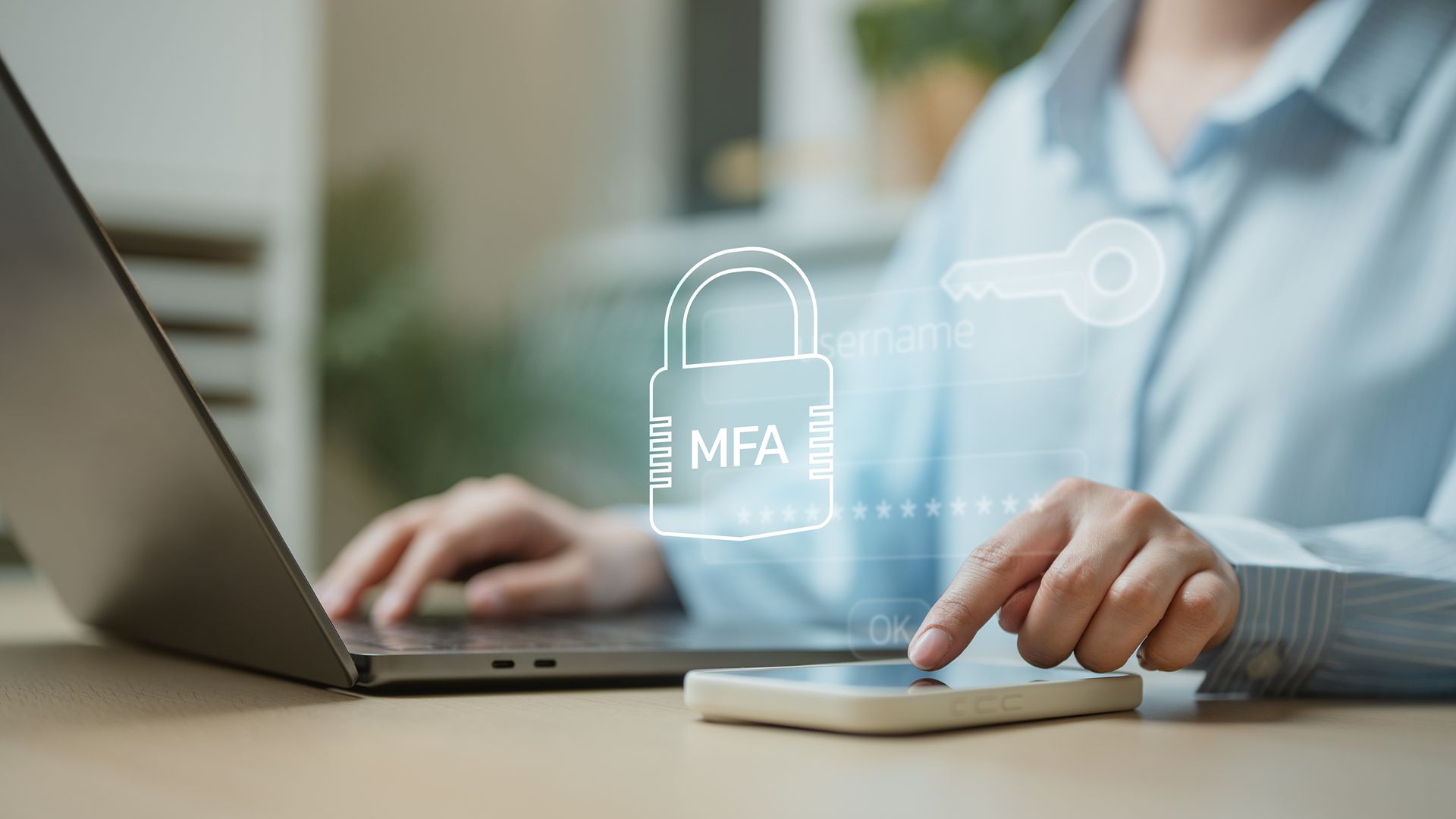
Multi-factor authentication — MFA — requires users to verify their identity through two or more independent factors before gaining access to a system. Those factors fall into three categories: something you know (a password or PIN), something you have (a hardware token, smart card, or mobile device push notification), and something you are (a biometric like a fingerprint or facial scan). The core concept is simple: if one factor is compromised, the attacker still can't get in without the others.
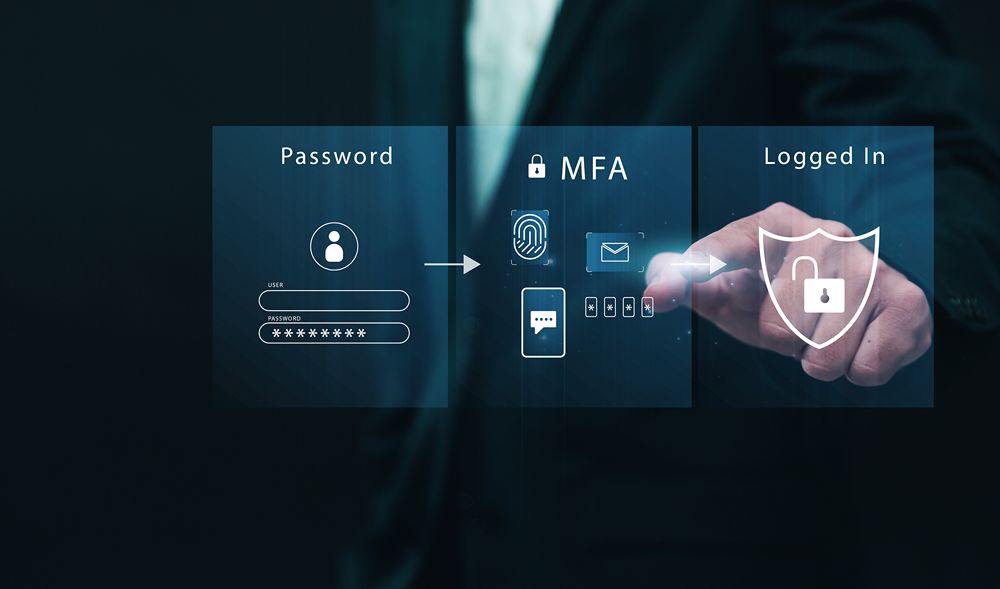
In healthcare, MFA matters more than in most industries because the sensitive patient data behind authentication barriers is both high-value and heavily regulated. Protected health information falls under HIPAA security rules, and HHS Office for Civil Rights enforcement actions increasingly cite inadequate access control — including the absence of MFA — as a contributing factor in breach investigations. The concepts of MFA aren't new, but the urgency is. A 2026 analysis found that 17% of cloud-related breaches resulted directly from the lack of multi-factor authentication. For a healthcare CIO managing access to EHR systems, clinical imaging platforms, health information exchanges, and administrative databases full of patient records, that 17% represents a preventable category of breach that MFA eliminates.
The development of MFA has moved well beyond simple SMS codes. Modern healthcare authentication practices include FIDO2 hardware keys, push-based mobile authentication, risk-adaptive MFA that escalates requirements based on login context, and biometric verification. Each approach carries tradeoffs in security strength, clinical workflow impact, and cost — and understanding those tradeoffs is what separates a MFA deployment that actually protects medical data from one that just checks a compliance box.
What Are the Most Common Root Causes of Healthcare Data Breaches?
Understanding the cause of data breaches in healthcare requires looking at the attack patterns, not just the headline numbers. According to Verizon's data, 60% of all breaches across industries involve the human element — stolen credentials, phishing, privilege misuse, or simple error. In healthcare, that percentage is even more pronounced because of how many people need access to data across clinical, administrative, and operational workflows.
Ransomware remains the most visible threat. Ransomware attack incidents accounted for 28% of large healthcare breaches, and that share is growing. A ransomware attack doesn't just encrypt data — it disrupts clinical operations, delays patient care, and forces health systems into impossible decisions about paying ransom versus rebuilding from backups. The 2024 Change Healthcare breach demonstrated what happens when a ransomware attack hits a central node in the healthcare data ecosystem: health services across the country ground to a halt.
But credential theft is the quieter, more persistent root cause that MFA directly addresses. Attackers who obtain valid login credentials — through phishing, credential stuffing, or purchasing breached databases — can walk through the front door of your healthcare systems without triggering perimeter alerts. They access patient records, exfiltrate sensitive data, and establish persistence in your network, often for months before detection. Poor security practices around credentials — shared passwords, single-factor access to critical systems, no session timeout controls — create the conditions that make this possible. Stronger methodologies of authentication such as hardware solutions and biometric verification eliminate the weakest link in this chain.
How Does MFA Improve the Security of Healthcare Systems Against Cyber Threats?
MFA breaks the attack chain at its most exploitable point: the login. When access to healthcare systems requires a second or third authentication factor, stolen passwords alone become useless. An attacker who phishes a clinician's password still can't access the EHR without the hardware token in the clinician's pocket or the biometric scan that only the clinician can provide. That single barrier stops the majority of credential-based attacks before any data is accessed.
The impact is measurable. Microsoft reported that MFA blocks more than 99.9% of automated credential attacks. In healthcare, where patient data access happens thousands of times per day across hundreds of users, that percentage translates into an enormous reduction in attack surface. MFA also provides a forensic benefit: when a breach does occur, authentication logs tied to multi-factor events make it easier to determine whether legitimate access was compromised and how, reducing the time to detect and contain incidents — which directly reduces the cost of a data breach.
Beyond credential theft, MFA provides a layer of defense against various cyber threats, and MFA solutions are categorised by the specific risks they address. Phishing-resistant MFA (FIDO2, smart cards) defeats real-time phishing proxies that intercept SMS codes. Risk-adaptive MFA escalates authentication requirements when login behavior looks anomalous — a login from an unfamiliar location or device triggers additional verification. For healthcare systems managing access to sensitive patient information across multiple facilities, clinical shifts, and remote connections, the ability to calibrate MFA strength to context is what makes modern implementations practical for clinical workflows without sacrificing data protection.
What MFA Approaches Work Best in Healthcare Environments?
Healthcare has unique workflow constraints that make MFA implementation more nuanced than in a typical corporate environment. A surgeon scrubbing in for a procedure can't type a one-time code. An ER nurse managing multiple patients can't wait 30 seconds for a push notification. Healthcare workers operate under time pressure that most industries don't face, and an MFA solution that slows down clinical workflows won't get adopted — it'll get circumvented. That's a data privacy and security problem, not just an inconvenience problem.
The best practice approaches for healthcare MFA balance security strength with clinical usability. Proximity-based solutions — tap-to-authenticate badges, Bluetooth-paired devices — allow fast access at shared clinical workstations without forcing clinicians to manually re-enter credentials. Biometric authentication (fingerprint scanners integrated into workstation peripherals) provides strong verification with near-zero friction. For remote access — telehealth platforms, VPN connections, administrative portals accessed from mobile devices — FIDO2 hardware keys or app-based push notifications provide phishing-resistant authentication that doesn't depend on SMS.
Where many healthcare organizations go wrong is treating MFA as a monolithic deployment: one solution, one factor, applied everywhere equally. A smarter approach is to review MFA based on risk context. Tier your systems by data sensitivity and clinical criticality. EHR access, health information exchange connections, and administrative access to patient records warrant the strongest authentication — phishing-resistant hardware or biometric factors. Lower-risk systems like cafeteria scheduling or facility maintenance portals may only need standard push-based MFA. Applying role-based access principles to your MFA deployment — matching authentication strength to data sensitivity and user privilege — gives you a security program that protects medical records without paralyzing clinical operations. Security training that teaches healthcare workers why MFA exists and how to use it properly is just as important as the technology itself.
How Do Internet of Healthcare Things Devices Complicate MFA and Access Control?
The internet of healthcare things — the growing ecosystem of connected medical devices, sensors, wearables, and healthcare monitoring systems — introduces authentication challenges that don't have simple MFA answers. An infusion pump doesn't have a keyboard. A patient monitoring sensor doesn't support biometric login. Yet these devices collect, transmit, and store sensitive patient data, and technologies incorporated in internet of healthcare things environments are increasingly targeted by attackers as entry points into broader healthcare networks.
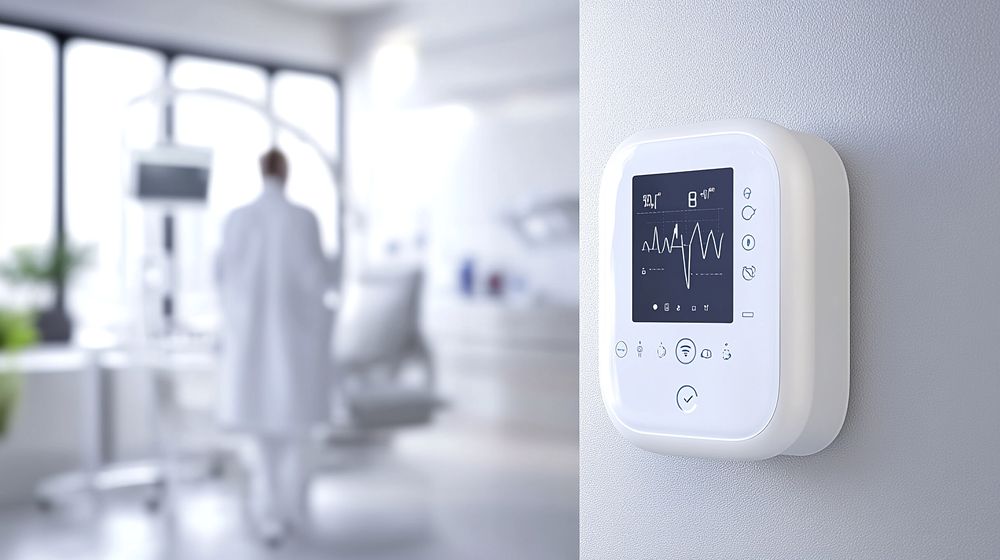
Connected medical devices represent one of the most exposed attack surfaces in modern healthcare. A 2026 analysis found that 99% of hospitals manage devices containing known, exploited vulnerabilities. Many of these devices run embedded operating systems that can't support modern authentication protocols, creating gaps where legacy security controls are the only option. When an IoT device connects to a network that also handles medical records and protected health information, the lack of strong authentication on that device becomes a risk vector for the entire smart healthcare system.
The answer isn't to force MFA onto devices that can't support it — it's to build compensating controls around them. Network segmentation isolates IoT devices from systems that handle sensitive data. Device identity certificates provide machine-to-machine authentication that doesn't require human interaction. Monitoring solutions track device behavior and flag anomalous data collection or transmission patterns. For a healthcare CIO, the risk management strategy for internet of healthcare things devices should layer these compensating controls with strong MFA on every human access point that connects to or manages those devices. You can't put a fingerprint scanner on a ventilator, but you can ensure that every human who administers, configures, or accesses data from that ventilator authenticates with more than just a password.
What Does HIPAA Actually Require for Authentication and Access Control in 2026?
HIPAA's Security Rule establishes standards for access control and authentication, but the language is deliberately flexible — and that flexibility has given healthcare organizations room to underinvest in MFA for years. The Security Rule requires covered entities to implement technical policies and procedures for electronic information systems that maintain electronic protected health information to allow data access only to authorized persons. It specifies the "addressable" implementation of unique user identification, emergency access procedures, automatic logoff, and encryption. Authentication is listed as a standard, but HIPAA doesn't explicitly mandate MFA.
That said, the enforcement environment has shifted significantly. OCR's 2026 enforcement posture now evaluates not just whether organizations conducted a risk analysis, but whether they acted on the risks they identified. If your risk assessment flags single-factor authentication on EHR systems as a vulnerability — and it should — failing to implement MFA becomes an enforcement exposure, not just a best practice gap. The 21 HIPAA penalties imposed in 2025 represented a 31% increase over 2024, and OCR has publicly cited inadequate access control in multiple settlement agreements. State attorneys general have also increased HIPAA-related enforcement actions by 40% since 2023.
For healthcare CIOs and risk leaders, the practical takeaway is this: HIPAA may not spell out "multi-factor authentication" by name, but the regulatory and legal trajectory leaves no room for single-factor access to systems containing health data. OCR expects security controls proportionate to the risk, and the risk of credential-based breach in healthcare is empirically documented. Implementing MFA across all systems that access protected health information isn't just a technical decision — it's a liability management decision. Cybersecurity consulting tailored to healthcare compliance helps organizations align their authentication practices with current enforcement expectations.
How Can Healthcare Organizations Build an MFA Strategy That Balances Security and Clinical Workflows?
The biggest obstacle to MFA adoption in healthcare isn't technology or cost — it's workflow disruption. Clinicians will bypass security protocols that add friction to patient care, and every workaround creates a vulnerability. A CIO who deploys MFA without accounting for clinical workflows will end up with shared credentials taped to monitors, which is worse than where you started. The key is designing an MFA strategy that's strong enough to prevent breaches and smooth enough that healthcare workers actually use it.

Start by mapping your access patterns. Who accesses what systems, from where, how often, and under what time constraints? An ICU nurse accessing the EHR from a shared bedside workstation has different authentication needs than a billing analyst accessing patient records from a home office. Use that mapping to define tiered authentication requirements. High-risk, high-frequency clinical access gets proximity-based or biometric MFA with fast unlock. Administrative and remote access to data gets phishing-resistant hardware-based MFA. System administrator access to data storage and infrastructure gets the highest authentication tier — hardware keys plus biometrics or similar layered approach.
Then build in exception handling. Emergency access procedures — break-glass protocols that allow temporary single-factor access in life-threatening situations — must be part of your design. HIPAA requires them, and clinicians need to trust that the security system won't stand between them and patient care in a crisis. But every break-glass event should trigger an alert, an audit log entry, and a follow-up review. These aren't workarounds — they're governed exceptions that maintain the integrity of your security program. Aggregated data from break-glass events also tells you whether your standard MFA implementation is creating too much friction: if clinicians are using emergency access for routine tasks, your MFA deployment needs adjustment, not more enforcement.
What Is the Return on Investment for MFA in Healthcare Data Protection?
Quantifying MFA's ROI in healthcare isn't abstract — the numbers make the case on their own. The cost of a data breach in U.S. healthcare averaged $9.8 million in 2025. IBM's research found that organizations with fully deployed security AI and automation — which includes robust identity and access management controls like MFA — saved $1.9 million per breach compared to those without. When you factor in that 17% of cloud-related breaches result from missing MFA and that credential-based attacks represent the most common initial attack vector, the cost of not deploying MFA dwarfs the cost of implementation.
An enterprise MFA deployment for a mid-sized health system — covering EHR access, VPN, email, and administrative systems — typically costs between $50,000 and $200,000 in the first year, depending on the solution and scale. That's a fraction of a single breach's financial impact, before accounting for data loss, reputational damage, OCR penalties, and the operational disruption that a ransomware attack inflicts. For a healthcare CIO presenting a business case to the board, the framing is straightforward: MFA is not a technology expense. It's a risk reduction investment that pays for itself the first time it prevents a credential-based breach — and statistically, it will prevent many.
Beyond direct cost avoidance, MFA strengthens your broader cybersecurity posture in ways that support organizational goals. Payer and partner organizations increasingly require MFA as a condition of data sharing agreements. Cyber insurance underwriters evaluate MFA deployment when setting premiums and coverage terms — health systems without MFA pay more for less coverage. And as the healthcare sector moves toward value-based care models that depend on data analytics, data quality, and data sharing across organizational boundaries, the security of authentication systems that protect that data becomes a business enabler, not just a cost center. Supply chain risk management increasingly includes MFA verification as a baseline requirement for vendor access to healthcare data.
What Steps Should Healthcare CIOs Take Now to Improve the Security of Authentication Across Their Organizations?
If your health system doesn't have MFA deployed across all systems that access sensitive patient data, you have an open vulnerability that attackers are actively exploiting. Here's the practical path forward for a healthcare CIO or risk officer in 2026:
Audit your current authentication landscape. Identify every system that stores, processes, or transmits patient information, medical records, or protected health information. Document which systems require MFA and which still rely on password-only access. That gap list is your immediate priority. Include the smart healthcare system devices and clinical applications that healthcare workers access daily — if they touch patient data, they need to be in scope.
Deploy phishing-resistant MFA where it matters most. EHR systems, health record access, administrative portals with access to medical data, and remote access connections should get hardware-based or biometric MFA first. Don't wait for a perfect enterprise-wide rollout — improve the security of your highest-risk access points now and expand from there. Understanding up-to-date MFA approaches means choosing solutions that resist real-time phishing proxies, not just basic SMS codes.
Address IoT and legacy systems with compensating controls. For systems and devices that can't support modern MFA, implement network segmentation, device identity management, and behavioral monitoring. The goal is ensuring that even if an IoT device is compromised, the attacker can't pivot to systems containing sensitive data.
Train your workforce. Security breaches overwhelmingly involve human error — 88% across all industries. MFA reduces the damage from compromised credentials, but security awareness training reduces the likelihood of compromise in the first place. Help your staff understand that protecting data isn't an IT function — it's a clinical responsibility.
Contact VisioneerIT to build a healthcare authentication strategy that protects patient data without slowing down clinical care.
Key Takeaways: MFA, Healthcare Data Breaches, and What Risk Leaders Must Do Now
- Healthcare has led all industries in data breach costs for 15 consecutive years — averaging $9.8 million per breach in the U.S. in 2025.
- A stolen medical record sells for $260–$310, roughly 10x the value of a stolen credit card. Medical data is permanent and irreplaceable.
- 17% of cloud-related breaches result from missing multi-factor authentication. MFA blocks over 99.9% of automated credential attacks.
- MFA for healthcare must balance security strength with clinical workflow — proximity badges, biometrics, and risk-adaptive MFA outperform SMS codes in clinical environments.
- Internet of healthcare things devices can't support traditional MFA but need compensating controls: network segmentation, device identity certificates, and behavioral monitoring.
- HIPAA doesn't explicitly mandate MFA, but OCR enforcement increasingly treats missing MFA as a failure to implement reasonable access controls — especially when risk assessments identify it as a gap.
- The cost of a data breach in healthcare far exceeds the cost of enterprise MFA deployment. MFA is risk reduction, not a technology expense.
- Cyber insurance underwriters and business partners increasingly require MFA as a baseline — it affects premiums, coverage, and partnership eligibility.
- Audit your authentication landscape, deploy phishing-resistant MFA on high-risk systems first, address IoT with compensating controls, and train your workforce.
- Contact VisioneerIT for healthcare cybersecurity consulting, MFA strategy, and compliance-aligned security program development.

%402x.svg)
%402x.svg)

