



.svg.png)

Scope 3 emissions account for roughly 80 to 90 percent of a typical company's carbon footprint — and around 70% of companies admit they lack visibility into that data. That gap is the central problem in corporate sustainability reporting, because Scope 3 data is fragmented by design: it arrives from hundreds of suppliers, contractors, and service providers, in inconsistent formats, at unpredictable intervals, often from small vendors with no ESG reporting experience at all. Artificial intelligence is genuinely changing this, automating data collection, filling gaps intelligently, and turning scattered supplier inputs into audit-ready carbon data. This guide covers what AI actually does well in ESG data management, where it fails, how Scope 3 reporting works under CSRD and the GHG Protocol, and how to deploy AI for ESG without producing disclosures you can't defend. Written for the sustainability lead, supply chain executive, or ESG reporting owner who has to file something accurate.
Why is Scope 3 emissions reporting so difficult?
The difficulty is structural rather than technical. Scope 1 covers direct emissions from owned sources and Scope 2 covers purchased energy — both are relatively bounded and measurable from internal systems. Scope 3 covers everything else across the value chain: purchased goods and services, transportation, business travel, use of sold products, end-of-life treatment. It spans fifteen categories, most of which sit outside your organizational boundary and inside someone else's operations. You are, in effect, reporting on data you don't own and can't directly measure.

That creates a supplier engagement problem at enormous scale. Value-chain transparency means engaging hundreds or thousands of suppliers, many of them small or very small enterprises without the systems, staff, or expertise to produce emissions data. Supplier response rates remain low, and the responses that do arrive vary wildly in quality and format. Many organizations still operate with fragmented spreadsheets or legacy systems, which produces unreliable data mapping across the supplier landscape and, ultimately, compliance gaps and disclosures nobody wants to certify.
The fallback most companies use is spend-based emission factors — multiplying what you spent with a supplier by an industry-average emission factor. It's defensible as a starting point and useless for actually reducing emissions, because it can't distinguish between a low-carbon supplier and a high-carbon one in the same industry. Switching to a genuinely cleaner vendor doesn't move a spend-based number at all. Moving from spend-based estimates toward supplier-specific data is the single biggest improvement available in Scope 3 emissions reporting, and it's precisely the data collection problem AI is suited to attack.
What is driving the urgency around ESG disclosure in 2026?
Regulation, primarily. The Corporate Sustainability Reporting Directive and its accompanying European Sustainability Reporting Standards put Scope 3 firmly on the agenda, requiring companies in scope to disclose climate and emissions information under ESRS — including gross Scope 1, 2, and 3 emissions. Supply chain due diligence rules push in the same direction, forcing companies to map supplier emissions, engage upstream vendors, and disclose verified Scope 3 data. The reporting obligations are no longer aspirational commitments; they're compliance requirements with audit exposure attached.
There is real uncertainty about scope, and it's worth being honest about it. The EU's Omnibus proposal would significantly narrow CSRD applicability, potentially limiting requirements to large companies only, and the outcome remains unsettled. But the strategic conclusion holds regardless of how that lands: companies need to stay audit-ready and build the capability to gather reliable ESG data. Regulatory relief on thresholds doesn't change investor expectations, customer supplier-data requirements, or the fact that your large customers will pass their own Scope 3 obligations down to you as a supplier.
The readiness gap is the uncomfortable part. Roughly 80% of organizations reportedly lack the data integrity required to meet CSRD compliance mandates, and the volume of decentralized data required for comprehensive Scope 3 tracking simply exceeds human processing capacity. That's the core case for AI in ESG reporting — not that it's fashionable, but that manual processes cannot scale to the data volumes that modern reporting standards demand. Companies attempting to meet 2026 disclosure requirements with spreadsheets and email requests to suppliers are attempting something arithmetically impossible.
How does AI improve ESG data collection and quality?
The first and largest contribution is automating data collection from unstructured sources. AI systematically parses supply chain documents, supplier invoices, utility bills, and shipping records to extract relevant ESG metrics — work that previously required people manually reading documents and rekeying numbers. Machine learning models classify spend categories, map line items to the correct Scope 3 category, and match transactions to appropriate emission factors automatically. This removes the need for manual data entry at the scale Scope 3 demands, which is the difference between a reporting process that's feasible and one that isn't.

Data quality improves through validation rather than just speed. AI-driven verification tools identify inconsistencies, flag missing values, and detect anomalies in supplier submissions — a supplier reporting emissions an order of magnitude off their prior year, or a data feed that's stopped updating. These checks catch errors that would otherwise surface during assurance, or worse, after publication. AI can also intelligently estimate gaps where supplier-specific data genuinely isn't available, using comparable suppliers and industry benchmarks rather than defaulting to crude spend-based averages for everything.
The third contribution is centralization. AI platforms solve the scattered-data problem by ingesting feeds from ERP systems, procurement platforms, IoT devices and live data feeds, and supplier portals into a centralised reporting system where ESG data sits alongside financial data rather than in a separate silo. That integration matters because emissions data increasingly needs the same rigor and traceability as financial reporting. Building that analytical foundation is a data engineering problem before it's a sustainability problem, which is why our data analytics practice is usually where this work actually starts.
Can AI enable real-time emissions tracking?
This is one of the more meaningful shifts, because the traditional model — an annual manual reporting cycle, compiled months after the period it describes — has collapsed under the weight of complexity. Real-time or near-real-time emissions tracking becomes possible when data flows continuously from connected systems: IoT devices monitoring energy consumption, live logistics feeds, and automated ingestion of invoices and utility data. Instead of discovering your carbon footprint six months late, you monitor it as it accumulates.
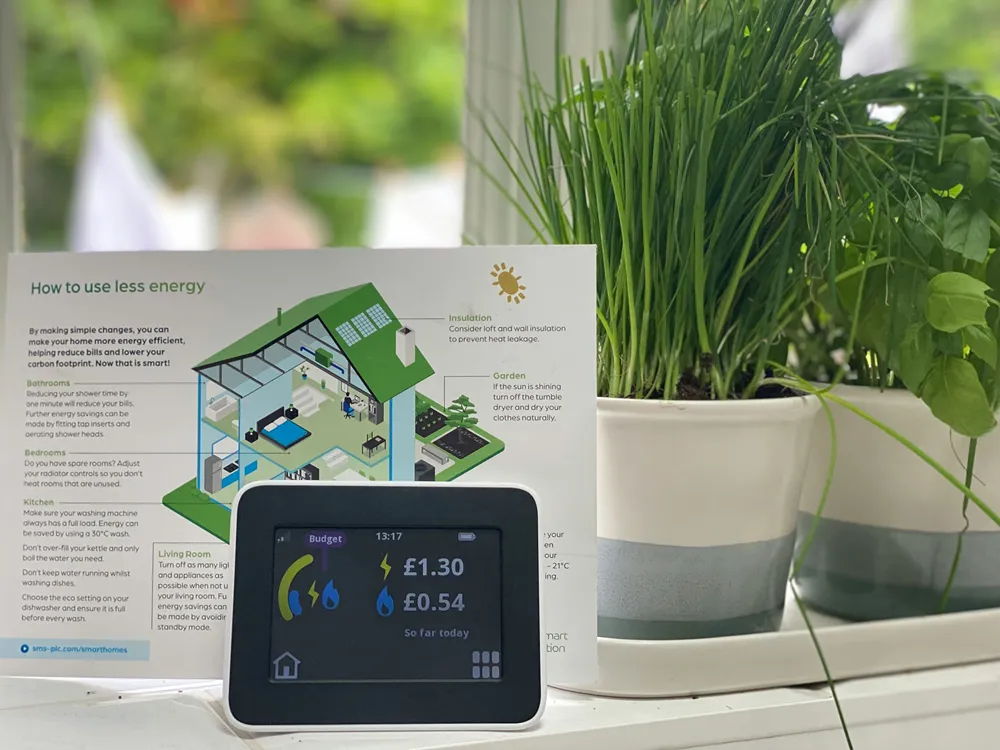
The operational value is that real-time data makes emissions actionable rather than merely reportable. A number you receive annually tells you what happened; a number you can see monthly tells you whether an intervention worked. Automation enables continuous monitoring, so businesses can track, adjust, and report emissions on an ongoing basis, and AI-driven analytics surface where reduction opportunities actually exist across the value chain. That turns sustainability reporting from a compliance exercise into something that informs procurement, logistics, and product decisions.
The same connected-systems approach underpins broader supply chain visibility, which is why ESG data infrastructure and supply chain digital infrastructure keep converging. The sensor networks, live data feeds, and modeling that give you emissions visibility are largely the same ones that give you disruption visibility — a pattern we explore in our work on digital twins in supply chain management and in the sensor-and-data-feed architecture behind IoT in smart cities. Companies that build this infrastructure once tend to get both capabilities from it.
How does AI streamline sustainability reporting and disclosure?
Once the data is collected and validated, AI compresses the reporting step itself. Automated disclosure drafting generates reports structured to the required frameworks — CSRD/ESRS, ISSB, GRI, TCFD-aligned climate disclosures — from the same underlying dataset, rather than requiring a separate manual exercise for each. Given that most organizations report against multiple reporting frameworks with overlapping but non-identical requirements, that multi-framework mapping is where a great deal of the reporting time actually goes. AI makes it a mapping problem rather than a rewriting problem.
The audit dimension is where this earns its keep. Carbon audits are becoming standard practice, and audit-ready means every reported figure traces back to a source document with a clear calculation path. Well-built platforms generate reports with verifiable data trails, aligning to the GHG Protocol and the relevant reporting standards so that an assurance provider can follow the lineage from disclosure back to invoice. That traceability is what separates a defensible disclosure from an indefensible one, and it's a capability manual processes struggle to maintain across thousands of data points.
The organizational benefit is that reporting stops consuming the sustainability team. When AI automates data collection, validation, and first-draft disclosure generation, ESG teams focus on interpretation, target-setting, supplier engagement, and actual decarbonization — the work that reduces emissions rather than merely documenting them. Reducing reporting time is not just an efficiency gain; it's a reallocation of scarce expert capacity toward the outcomes the reporting exists to drive.
What are the limits and risks of using AI for ESG?
The most serious risk is producing confident numbers you cannot defend. AI tools can backfire on a disclosure when estimates are generated without clear lineage between inputs and outputs — if an assurance provider asks how a figure was derived and the answer is effectively "the model produced it," that's an audit finding, not a disclosure. Companies should not rely on prediction techniques without transparent methodology and traceable data lineage. "We could not measure it" is a weak response to a regulator; "we estimated it and can't explain how" is worse.

Human oversight has to remain active, and the failure mode is over-reliance rather than the technology itself. Automation introduces risk precisely when people stop checking it — when anomaly flags go unreviewed, when estimated values silently substitute for real supplier data year after year, when nobody notices a data feed broke in Q2. The mature pattern is AI handling volume and humans owning judgment: reviewing exceptions, validating methodology changes, and signing off on what gets published. That's a governance requirement as much as a staffing one.
There's also a tooling caution worth stating. General-purpose AI tools don't solve the upstream problem of fragmented, unstructured data arriving from hundreds of sources, and they lack the domain-specific emissions expertise that granular ESG measurement requires. Platforms that bolt automation onto basic carbon accounting often cover specific workflows rather than end-to-end processes, leaving reconciliation overhead between stages. Evaluating whether a tool actually handles your data reality — or just demos well — is the difference between an ESG investment that works and one that adds another silo. The broader discipline of making AI deliver measurable business value rather than shelfware applies directly, as our guide to enterprise AI implementation lays out.
How does supplier engagement change with AI?
AI shifts supplier engagement from mass data requests toward targeted, prioritized outreach. Rather than emailing a questionnaire to two thousand suppliers and hoping, analytics identify which suppliers actually drive your Scope 3 footprint — typically a small fraction accounting for a large majority of emissions — so engagement effort concentrates where it changes the number. That prioritization alone often improves both response rates and data quality, because you're having fewer, deeper conversations with the vendors that matter.
For suppliers who can't produce emissions data, AI reduces what you need from them. If a platform can derive reasonable estimates from invoices, product categories, shipping records, and comparable-supplier benchmarks, a small vendor doesn't need an ESG function to be included in your inventory. That matters because supplier data requirements are a genuine burden on small enterprises, and the ones lacking reporting experience are exactly the ones most likely to ignore a questionnaire. Lowering the bar for participation increases coverage.
The governance overlay is that supplier emissions data is supplier risk data. The same vendor relationships you're assessing for carbon intensity carry security, continuity, and compliance exposure, and mature organizations increasingly assess them together rather than running parallel programs — which is where our supply chain risk management and third-party risk management practices intersect directly with ESG data collection. One supplier assessment, multiple risk dimensions, is more efficient and more accurate than separate teams asking the same vendors different questions.
Where should an organization start with AI for ESG?
Start with a data inventory and an honest materiality assessment, because you cannot automate collection of data you haven't located. Map which Scope 3 categories are actually material to your footprint — for most companies a handful dominate — and identify where the data for those categories currently lives: ERP, procurement, logistics providers, supplier portals, or nowhere at all. That map tells you which integrations matter and prevents the common failure of buying a platform before understanding what it needs to ingest.
Then sequence for the highest-impact categories rather than pursuing complete coverage immediately. Automating data collection and emission factor mapping for your two or three largest Scope 3 categories delivers most of the accuracy improvement available, and it produces a working process you can extend. Move those categories from spend-based estimates toward supplier-specific data where the suppliers can support it, and use intelligent estimation for the rest — with the methodology documented so it survives assurance. Build the audit trail from the start; retrofitting traceability onto an existing dataset is far harder than capturing it as you go.
Finally, treat this as data infrastructure with governance attached, not as a sustainability software purchase. The platform matters less than whether your ESG data is integrated, validated, traceable, and owned by someone accountable — and whether the AI operating on it is governed with the same rigor you'd apply to any consequential automated system. Companies that build that foundation get compliance as a byproduct and competitive advantage as an outcome, because they can answer customer and investor questions their competitors can't. If your organization is building that capability, talk to our team about the data infrastructure and AI governance underneath credible ESG reporting.
Key Things to Remember
- Scope 3 is the whole problem. It's typically 80–90% of a company's carbon footprint, spans 15 categories outside your organizational boundary, and ~70% of companies lack visibility into it. You're reporting on data you don't own.
- Spend-based estimates are a starting point, not an answer. Multiplying spend by industry-average emission factors can't distinguish a clean supplier from a dirty one — so it can't guide reduction. Moving toward supplier-specific data is the biggest available improvement.
- Regulation is driving urgency despite scope uncertainty. CSRD/ESRS require gross Scope 1, 2, and 3 disclosure; the EU Omnibus proposal may narrow applicability, but customer and investor pressure makes audit-readiness necessary regardless.
- Manual processes cannot scale to the data volume. Roughly 80% of organizations lack the data integrity CSRD requires, and decentralized Scope 3 data exceeds human processing capacity — that's the real case for AI, not novelty.
- AI's biggest wins are collection, validation, and centralization. Parsing invoices and supply chain documents to extract ESG metrics, flagging anomalies and missing values, and unifying scattered feeds (ERP, procurement, IoT, supplier portals) into one system alongside financial data.
- Real-time tracking makes emissions actionable. Continuous data flow replaces the annual manual cycle, so you can tell whether an intervention worked — and the same connected infrastructure delivers broader supply chain visibility.
- The critical risk is undefensible numbers. AI estimates without clear data lineage backfire under assurance. Keep human oversight active, document methodology, and build the audit trail from day one — "the model produced it" is an audit finding.
- Start with materiality, not software. Map which Scope 3 categories dominate and where that data lives, automate the top two or three first, prioritize supplier engagement where it moves the number, and treat the whole thing as governed data infrastructure.

%402x.svg)
%402x.svg)

