


.svg.png)


Smart cities are no longer a concept from science fiction — they are being built right now, block by block, sensor by sensor, across every continent. At the heart of this transformation is the Internet of Things, a network of connected devices that turns static urban infrastructure into a living, responsive, data-driven system. This article explores how IoT in smart cities works, the most impactful smart city IoT applications, and why IoT solutions for smart cities are becoming the defining investment of modern municipal governance. Whether you're a city planner, technology leader, or enterprise decision-maker, understanding the role of IoT in urban development is essential reading for anyone shaping the future of smart communities.
What Is Smart City IoT and Why Is It Transforming Urban Infrastructure?
Smart city IoT refers to the deployment of internet of things devices — sensors, cameras, actuators, and connected IoT devices — across city infrastructure to collect, transmit, and act on real-time data. The integration of IoT into urban systems allows city governments to monitor everything from traffic flow and air quality to energy usage and public safety from a centralized management systems platform.
The development of smart cities has accelerated dramatically over the past decade as the cost of IoT devices has fallen and connectivity infrastructure has matured. What once required expensive, purpose-built hardware can now be accomplished with low-cost smart sensors, wireless networks, and cloud-based analytics platforms. IoT technologies help cities move from reactive maintenance — fixing things after they break — to predictive management that prevents failures before they occur.
Smart infrastructure powered by IoT changes the fundamental relationship between a city and its physical assets. Roads, bridges, water systems, and power grids that once operated as passive infrastructure become active participants in city operations — continuously reporting their status, optimizing their performance, and alerting operators to anomalies in real time. This shift is what makes IoT the true backbone of smart cities rather than simply another layer of technology.

What Are the Core IoT Technologies Powering Smart City Solutions?
The IoT technologies that power smart city solutions span a broad ecosystem of hardware, connectivity, and software. At the edge, smart sensors and IoT devices collect real-time data on physical conditions — temperature, motion, vibration, air quality, water pressure, and more. These devices use low-power wide-area networks like LoRaWAN, NB-IoT, and 5G to transmit data continuously without draining battery reserves.
Digital technologies at the platform layer — cloud computing, edge processing, and AI-powered analytics — transform the raw data collected by sensors into smart city applications that city officials can act on. IoT smart city platforms aggregate data from thousands of connected devices simultaneously, correlating signals across systems to surface patterns that no human operator could detect manually. The use of machine learning in these platforms is what elevates IoT from simple telemetry to genuine urban intelligence.
IoT solutions also rely on robust cybersecurity infrastructure to protect the enormous volume of sensitive city data flowing through these networks. Modern IoT deployments in smart cities incorporate end-to-end encryption, device authentication, and anomaly detection to guard against cyber threats. As smart city networks scale, security becomes as critical as connectivity — a compromised sensor network in critical infrastructure can have consequences far beyond a typical IT breach.
How Does IoT Infrastructure Support Smart City Traffic and Transportation?
Public transportation and traffic management are among the highest-impact use cases for IoT in smart cities. Smart city IoT applications in transportation include adaptive traffic signal systems that adjust cycle timing in real time based on vehicle density detected by road sensors, reducing congestion and emissions simultaneously. These systems can cut average commute times significantly while lowering energy consumption across the road network.
IoT technologies also enable smart parking solutions that guide drivers to available spaces in real time via mobile apps and dynamic signage. Smart parking systems use ground-embedded sensors to detect occupancy and update availability data continuously, eliminating the circling behavior that contributes significantly to urban congestion and pollution. Cities that have deployed smart parking at scale report measurable reductions in inner-city traffic volume.
Connected smart transit systems use IoT to track vehicle locations, predict arrival times, and dynamically adjust routes based on passenger demand. Real-time data from transit sensors feeds directly into passenger information systems, reducing wait uncertainty and improving the overall quality of life for commuters. The future of smart urban mobility depends on this kind of seamless IoT-enabled coordination between infrastructure and the people who use it daily.
What Role Does IoT Play in Smart Energy and Grid Management?
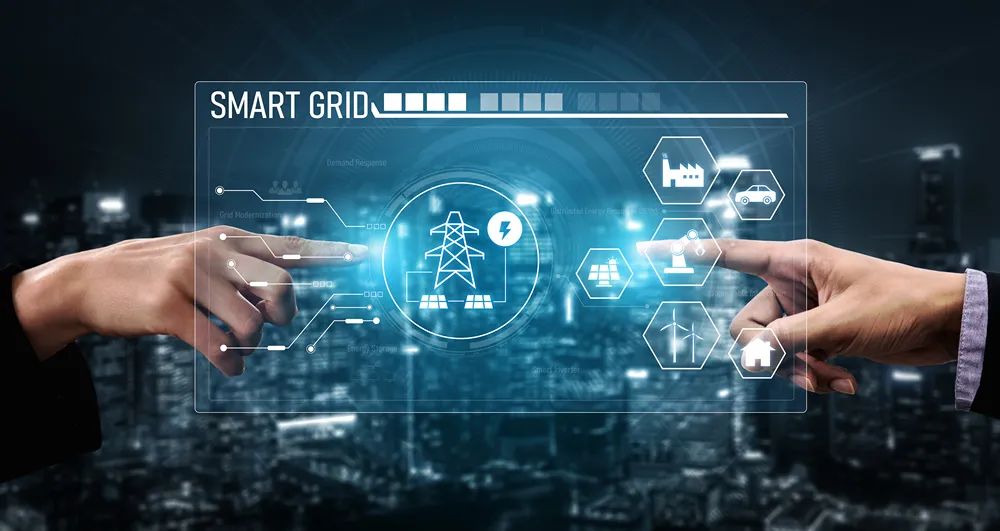
Energy is one of the most critical domains for smart city investment, and IoT is at the center of every serious smart grid initiative. A smart grid uses IoT sensors and connected IoT devices deployed throughout the power distribution network to monitor load, detect faults, and balance supply and demand in real time. This level of visibility allows utilities to reduce outages, optimize distribution, and integrate renewable energy sources far more effectively than traditional grid management allows.
Smart metering — the deployment of IoT-enabled electricity, gas, and water meters — gives both utilities and consumers granular visibility into energy consumption patterns. Real-time data from smart metering infrastructure enables dynamic pricing, demand response programs, and targeted conservation initiatives. Cities that have implemented smart metering at scale consistently report reductions in overall energy consumption and significant improvements in grid reliability.
IoT-enabled solutions also support the expansion of renewable energy integration by providing the real-time monitoring and control capabilities that variable energy sources require. Solar and wind generation fluctuate with weather conditions — smart grid IoT technology allows operators to anticipate these fluctuations and adjust dispatch accordingly, maintaining grid stability while maximizing clean energy utilization. Smart infrastructure in the energy sector is not just an efficiency play; it is a foundational requirement for the low-carbon city of the future.
How Are Smart Buildings Driving IoT Adoption Across City Infrastructure?
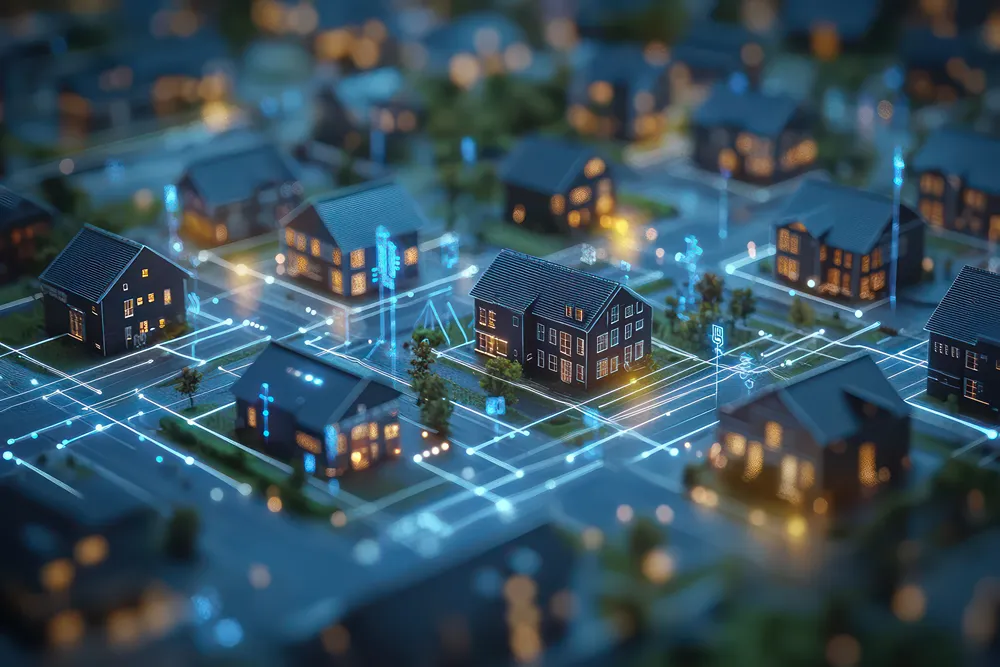
The smart building is one of the most tangible and widely deployed expressions of smart city IoT technology. A smart building uses an integrated network of sensors, automation systems, and AI-driven controls to optimize lighting, HVAC, security, and occupancy management in real time. Smart lighting systems that adjust brightness based on occupancy and natural light availability alone can reduce building energy costs by 30–50%.
Smart homes and commercial smart building deployments are increasingly connected to broader city systems, creating a layered architecture of IoT intelligence that spans from the individual unit to the neighborhood to the city grid. When a smart building participates in a demand response program, its energy systems automatically reduce consumption during peak grid periods in exchange for utility incentives — a behavior only possible through IoT connectivity. This integration of IoT across scales is what transforms isolated technology deployments into genuine smart city infrastructure.
Implementation of smart building technology also creates rich datasets that city planners can use to model urban energy demand, inform zoning decisions, and plan infrastructure investments. City officials who can access aggregated, anonymized real-time data from across their building stock gain planning capabilities that were previously impossible. Smart city development accelerates when smart building deployments are designed from the start to contribute to the broader IoT ecosystem rather than operate as standalone systems.
What Are the Best Smart City IoT Applications for Public Safety?
Public safety is one of the most compelling case studies for smart city IoT applications. IoT-connected surveillance and sensor networks allow law enforcement and emergency services to respond faster, allocate resources more effectively, and prevent incidents before they escalate. Smart city gunshot detection systems, for example, use acoustic sensors deployed across neighborhoods to pinpoint the location of gunfire within seconds, dramatically reducing response times.
Environmental safety is another critical IoT application in public safety contexts. Air quality monitoring networks built on distributed IoT sensors provide real-time data on pollution levels across the city, enabling health authorities to issue alerts, adjust traffic routing, and identify pollution sources rapidly. Air quality data combined with weather modeling allows city systems to predict high-pollution events and take preemptive action — protecting vulnerable populations before exposure occurs.
IoT technologies also enhance the resilience of city infrastructure against natural disasters and climate events. Sensors embedded in bridges, levees, and storm drain systems provide continuous structural health monitoring, alerting engineers to stress indicators before failures occur. Smart city initiatives that integrate IoT-based infrastructure monitoring with emergency management platforms allow city officials to respond to crises with unprecedented speed and situational awareness, protecting both lives and critical assets.
How Does IoT Enable Smart Waste Management in Modern Cities?
Smart waste management is one of the most immediately practical and cost-effective IoT smart city solutions available to municipalities today. Traditional waste collection operates on fixed schedules regardless of actual fill levels — a deeply inefficient approach that wastes fuel, labor, and vehicle capacity. Smart waste systems deploy fill-level sensors inside collection bins that transmit real-time data to route optimization platforms, enabling dynamic collection scheduling based on actual need.
IoT sensors in smart waste infrastructure can also monitor contamination levels, detect illegal dumping, and track the movement of waste through the recycling and disposal supply chain. This data collection capability gives waste management authorities visibility into the full lifecycle of municipal solid waste, enabling evidence-based policy decisions and compliance monitoring. Cities that have deployed smart waste management at scale report fuel savings of 20–40% and significant reductions in overflow incidents.
The benefits of smart waste management extend beyond operational efficiency to environmental impact. By optimizing collection routes and reducing unnecessary vehicle trips, smart waste systems cut carbon emissions from municipal fleets. By improving contamination detection, they increase the quality and value of recyclable materials recovered. Smart city sustainability goals are materially advanced by smart waste investments — making this one of the highest-return IoT solutions for smart cities available to urban planners today.
What Are the Key Benefits of Smart Infrastructure for City Residents?
The benefits of smart infrastructure ultimately come down to a single metric: quality of life. IoT-driven smart cities that invest in connected infrastructure deliver measurably better outcomes for residents across every dimension of urban experience — safer streets, cleaner air, more reliable transit, lower utility bills, and faster emergency response. These are not incremental improvements; they represent a fundamental upgrade in what city government can deliver.
Smart city investments also drive economic development by creating environments that attract talent, businesses, and investment. Cities known for strong smart city infrastructure — Singapore, Amsterdam, Barcelona, Kansas City — consistently rank among the most competitive urban economies in the world. The future of urban economic development is inextricably linked to smart infrastructure capability, making IoT investment a strategic economic imperative as much as a service delivery decision.
Residents of IoT-driven smart cities also benefit from greater transparency and participation in city governance. When city performance data is made publicly accessible through open data portals and smart city apps, citizens can hold governments accountable for service delivery in ways that were previously impossible. Smart city technology is not just about optimizing infrastructure — it is about building a more responsive, accountable, and equitable relationship between city government and the people it serves. Explore how VISIONEERIT's Digital Twin services can help your organization model and simulate smart infrastructure before deployment, reducing risk and accelerating smart city development.
What Challenges Must Cities Overcome to Scale IoT Smart City Solutions?
Scaling smart city IoT from pilot projects to city-wide deployments presents significant technical, financial, and organizational challenges. Infrastructure fragmentation is one of the most common barriers — legacy systems built on proprietary protocols often cannot communicate with modern IoT platforms without costly middleware or replacement. City officials who use an open standards approach to smart city procurement reduce this risk significantly, ensuring that new IoT deployments can integrate with both existing and future systems.
Data governance and privacy are critical concerns that must be addressed before IoT smart city deployments can scale with public confidence. The network of connected devices in a smart city generates an enormous volume of data about how residents move, behave, and use public services — data that must be protected, governed, and used responsibly. Smart city projects that establish clear data governance frameworks from the outset build the public trust necessary for long-term program success.
Funding and procurement complexity also slow smart city development in many jurisdictions. IoT solutions require upfront capital investment with benefits that often accrue over years — a timeline that is difficult to align with annual budget cycles. Smart city initiatives that use public-private partnership models, federal funding programs, and outcome-based procurement contracts have shown the most success at overcoming this barrier. For organizations navigating the intersection of technology investment and government procurement, VISIONEERIT's Federal B2G Strategy services provide the strategic guidance needed to align smart city investments with public sector funding mechanisms.

What Is the Future of Smart Cities and IoT-Driven Urban Development?
The future of smart cities is one of increasing autonomy, intelligence, and integration. As IoT technologies mature and AI capabilities advance, smart city systems will move from monitoring and alerting to autonomous optimization and self-healing infrastructure. IoT-driven smart cities of the next decade will use AI to predict infrastructure failures, automatically reroute traffic around incidents, and dynamically allocate public services based on real-time demand — all without human intervention.
The city of the future will also be defined by seamless interoperability between smart city systems that today operate in silos. Smart homes, smart building networks, transit systems, energy grids, and public safety infrastructure will share data through unified smart city platforms, creating emergent intelligence that is greater than the sum of its parts. Connected smart ecosystems of this kind require both technical standards and governance frameworks that the industry is actively developing today.
IoT and smart cities will also play a central role in climate resilience as urban areas face increasing pressure from extreme weather, resource scarcity, and population growth. Smart infrastructure that can monitor, predict, and respond to environmental stress in real time will be essential for keeping city systems functional under conditions that would overwhelm traditional infrastructure. Organizations that consult with experienced technology partners to plan their smart city roadmap today will be best positioned to lead in this rapidly evolving landscape. Learn how VISIONEERIT's AI Adoption services can accelerate your smart city intelligence strategy, and explore our broader thinking on digital transformation in our guide to navigating digital transformations. For authoritative frameworks on smart city standards, NIST's Cyber-Physical Systems guidance and the ITU's Smart Sustainable Cities initiative are essential references.
Key Takeaways: What to Remember About IoT in Smart Cities
- IoT in smart cities transforms static city infrastructure into a dynamic, responsive system that continuously monitors, optimizes, and improves urban services in real time.
- The backbone of smart cities is a network of connected devices — sensors, actuators, and IoT devices — that generate the real-time data city systems need to function intelligently.
- Smart city IoT applications span transportation, energy, public safety, smart waste management, smart building systems, and environmental monitoring — delivering improvements across every dimension of urban life.
- IoT technologies enable smart grid management, smart metering, and renewable energy integration, making energy systems more efficient, reliable, and sustainable.
- Smart parking solutions, adaptive traffic management, and public transportation optimization are among the highest-ROI near-term IoT investments available to city governments.
- Air quality monitoring, structural health sensing, and emergency response integration represent critical public safety applications of smart city IoT.
- Smart waste management using fill-level IoT sensors reduces collection costs by 20–40% while cutting carbon emissions and improving recycling quality.
- Data governance, privacy protection, and open standards procurement are foundational requirements for smart city programs that can scale with public trust and institutional confidence.
- Implementation of smart city technology requires alignment between technical, financial, and organizational capabilities — public-private partnerships and federal funding programs help bridge the investment gap.
- The city of the future will be defined by autonomous, AI-driven smart infrastructure that integrates smart homes, transit, energy, and safety systems into a unified, self-optimizing urban intelligence platform.
Ready to build smarter infrastructure for your organization or city? Contact VISIONEERIT to explore how our IoT solutions, AI Adoption, and Digital Twin services can accelerate your smart city development roadmap.

%402x.svg)
%402x.svg)

