



.svg.png)

Every engineering organization carries technical debt. The question isn't whether you have it — you do — but whether you're managing it deliberately or letting it quietly tax every release. Unmanaged tech debt is why features that should take days take weeks, why your best developers spend their time firefighting instead of building, and why the roadmap keeps slipping for reasons nobody can quite name. This guide is for the CTO, VP of Engineering, or digital leader who has to keep shipping while the debt load grows underneath. It covers what technical debt actually is, the types worth tracking, the real consequences of ignoring it, and a practical framework to manage technical debt without freezing your roadmap for a six-month cleanup nobody asked for. The goal isn't zero debt — it's debt you chose, tracked, and can pay down on your terms.
What is technical debt, and why does the metaphor matter?
Technical debt is the future cost of rework you take on when your development team chooses a faster solution now over a better one that would take longer. Ward Cunningham coined the term in 1992 while building a financial application in Smalltalk, using the financial-debt analogy to explain to his boss why the code needed a rewrite. His point was precise: shipping first-time code is like going into debt, and a little debt speeds development as long as it's paid back promptly. The danger isn't borrowing — it's never repaying, because every minute spent working around not-quite-right code counts as interest on that debt.
The reason the metaphor endures is that it bridges the gap between engineers and everyone else. A CFO understands "we borrowed velocity and now we're paying interest" far better than "the code is messy." That shared language is what lets a development team make the business case for refactoring instead of being told to just keep shipping new features. Like financial debt, tech debt has a principal — the work to fix the shortcut — and interest — the extra effort every future change requires until you do.
What matters for a leader is the reframe: technical debt isn't a moral failing or simply bad code. It's a tradeoff, and often a rational one. The problem is almost never that debt exists. It's that most organizations carry debt they never chose, can't see, and have no plan to pay down. Making it visible is the entire game.
What are the different types of technical debt?
There's no single category of technical debt, and treating "tech debt" as one undifferentiated blob is why so many cleanup efforts fail. Debt shows up in different layers of your system, and each type needs a different fix. Code debt is the most familiar — poorly written code, duplication, overly complex implementations, the shortcuts developers take in the actual programming that make code harder to read and change. It's visible, and tools can measure it, which is why teams over-index on it and miss the more expensive categories.

The heavier types live below the code. Architectural debt is suboptimal system design — monolithic structures, tightly coupled components, foundations that can't support current or future requirements. This is the one to watch: Gartner predicts 80% of technical debt will be architectural by 2026, a shift from code-level to system-level problems that are far more expensive to unwind. Design debt and documentation debt compound the difficulty — the latter being the knowledge trapped in one person's head with docs years out of date. Infrastructure and DevOps debt covers outdated servers, manual deployment pipelines, and weak monitoring that slow every release and raise outage risk.
Then there's the category that keeps CISOs awake: security debt. Delayed security patches, outdated authentication, missing encryption, weak access controls — each one a vulnerability waiting to be exploited, and collectively the riskiest debt because it exposes you to breaches, regulatory penalties, and reputational damage. Process debt rounds out the taxonomy, created when teams skip testing or code review standards, producing more production bugs and longer timelines. Understanding these different types of technical debt is the prerequisite to prioritizing them, because you can't triage what you haven't categorized. The security and infrastructure layers in particular are where debt stops being an engineering inconvenience and becomes a business risk — the kind our cybersecurity consulting services are built to surface and remediate.
Is all technical debt bad? Intentional vs. unintentional debt
Not all debt is created equal, and the most useful distinction is whether you took it on deliberately. Steve McConnell split technical debt into two overall types: intentional and unintentional. Intentional technical debt is a conscious decision to optimize for the present — you ship now to hit a deadline or beat a competitor to market, fully aware you're borrowing against the future. This is often the right call. A startup racing to validate a product shouldn't gold-plate code that might get thrown away next quarter. Prudent, deliberate debt, taken with a plan to pay it back, is strategic, not reckless.
Unintentional technical debt is the dangerous kind precisely because you didn't see it coming. It arises from a lack of understanding, accidental mistakes, or poorly written code — a design approach that turns out to be error-prone, a pattern nobody realized was a problem until the system grew around it. You usually only discover unintentional debt after the software ships, which is why regular code reviews matter: they catch these issues while they're still cheap to fix. Inconsistent coding practices across a growing team are a common source, each developer solving the same problem a slightly different way until the codebase has no coherent shape.
Martin Fowler's Technical Debt Quadrant maps this cleanly, classifying debt along two axes — deliberate vs. inadvertent, and reckless vs. prudent. The worst quadrant is reckless-and-deliberate: "we don't have time for design," incurred under pressure with no plan to remediate. The framing that should guide any leader is simple. Intentional, tracked, prudent debt is a tool. Unintentional or reckless debt is a liability. The "move fast and break things" era treated all speed as virtue; the mature version is moving fast and knowing exactly what you broke and when you'll fix it.
What are the real consequences of unmanaged technical debt?
The consequences of technical debt are usually invisible on any single day and devastating in aggregate. The headline number is stark: technical debt costs US companies over $2.4 trillion a year, with high-debt organizations spending 40% more on maintenance and shipping features 25–50% slower than their peers. But the figure that lands hardest with engineering leaders is where their people's time actually goes. Stripe's Developer Coefficient research found developers spend roughly 42% of their work week dealing with technical debt — nearly half of your most expensive talent's time going to maintenance instead of building.

That time drain compounds into a velocity problem that starves the roadmap. When a development team spends half its capacity fighting legacy systems and workarounds, it isn't building new features, adopting automation, or moving the business forward. The debt doesn't just slow you down; it changes what you're capable of. Features that competitors ship in a sprint take you a quarter, and the gap widens every release because the interest keeps accruing on debt you never paid down.
There's a human cost that shows up in retention, and it's easy to underestimate. A large majority of developers report negative morale from excess legacy system work — nobody signed up to spend their career patching patches. The engineers you most want to keep are exactly the ones who leave when every day is firefighting. And in the worst case, security debt turns catastrophic: deferred modernization that looks like a saving on the budget becomes a seven-figure breach when an unpatched vulnerability gets exploited. The accumulation of technical debt is rarely one dramatic failure. It's a slow tax on velocity, morale, and risk that eventually forces a reckoning.
How do you measure and prioritize technical debt?
You can't manage what you can't see, so measurement comes first. The good news is that technical debt is now quantifiable rather than a vague complaint. Tools like SonarQube, CAST, and Kiuwan automate the measurement, scoring code complexity, duplication, test coverage, and maintainability so you get an objective read on the amount of technical debt across your codebase instead of relying on whoever complains loudest. The key engineering metrics worth tracking: code complexity scores, test coverage percentages, deployment frequency, the ratio of maintenance work to new feature work, system uptime, and how long it takes to onboard a new developer.

Measurement without prioritization just produces a longer backlog, though. The discipline is deciding which debt to pay down, and the right axes are business impact and risk — not how much the code annoys your senior engineers. Debt sitting in a stable, rarely-touched system delivering high ROI can often be left alone; debt in a high-change, customer-facing, or security-critical path should jump the queue. Prioritize the debt that's actively slowing delivery or exposing you to risk, and consciously defer the debt that isn't. This is where treating technical debt like a real backlog item — tracked alongside features, not in a separate document nobody reads — changes behavior.
Prioritization is also fundamentally a communication exercise, which is where many technical leaders drop the ball. Technical debt is not purely technical — 2026 research is emphatic that it's an organizational problem, with communication gaps and missing governance among the biggest root causes. You have to translate debt into business consequences leadership can act on: not "our auth module has high cyclomatic complexity" but "this is why the new feature slipped and why we're one exploit away from a breach." Get that translation right and debt reduction gets funded. Get it wrong and you'll be told to keep shipping until something breaks.
What's the best framework to manage technical debt?
The most effective approach to debt management is continuous and budgeted, not a heroic one-time cleanup. McKinsey recommends dedicating 15–20% of the IT budget to systematic debt reduction, and the organizations that do avoid the reactive trap where 30–40% of the budget eventually gets consumed by crisis-mode fixes. That's the core insight: paying down debt steadily is dramatically cheaper than paying it all at once under duress. Reserve a fixed slice of every sprint or every quarter for debt work, treat it as non-negotiable, and it compounds in your favor the way interest otherwise compounds against you.
The tactical framework has a few durable best practices. Make debt visible by tracking it in the same backlog as features, so tradeoffs are explicit rather than hidden. Refactor incrementally alongside feature work — the "boy scout rule" of leaving code cleaner than you found it beats scheduling a doomed six-month refactoring project. Establish coding standards and enforce them through code review to stop new debt at the source, since preventing debt is cheaper than remediating it. And govern the process: the research is clear that missing rules and protocols are a leading cause of debt accumulation, so lightweight governance around how and when debt gets taken on pays for itself.
Automation and DevOps are the force multipliers here. Automated testing catches the regressions that make refactoring scary, so teams refactor more confidently and more often. A mature DevOps pipeline with automated deployment, monitoring, and quality gates prevents whole categories of infrastructure and process debt from forming. This is exactly where intelligent automation and cloud automation earn their keep — automating the testing, deployment, and monitoring workflow so your team spends less time on the manual toil that generates debt in the first place. AI-driven approaches are pushing this further, with organizations reporting up to 30% maintenance cost reductions by using tooling to analyze and prioritize debt automatically.
How does technical debt connect to legacy systems and modernization?
Technical debt and legacy systems are two views of the same problem, separated mostly by time. Today's rushed shortcut is tomorrow's legacy code, and a legacy system is largely just technical debt that compounded for a decade — the ERP from 2008 that only two people understand, the framework nobody dares upgrade. When architectural and infrastructure debt accumulate past a threshold, incremental refactoring stops being enough and you're looking at genuine modernization: re-architecting, replatforming, or rebuilding rather than patching.
Knowing where that threshold sits is a real judgment call, and getting it wrong is expensive in both directions. Modernize too early and you rewrite systems that were fine; too late and the debt load brings delivery to a standstill, exactly as Cunningham warned. The signal is usually velocity: when the ratio of maintenance to new-feature work creeps past 40–50% and every change to a system takes disproportionately long, the debt has crossed from manageable to structural. At that point, systematic modernization is the debt-reduction strategy, and it needs to be planned rather than triggered by a failure. Our complete guide to legacy application modernization and our cloud migration playbook both walk through how to make that call and sequence the work without halting the business.
The connection also runs forward into AI readiness, which raises the stakes in 2026. You can't layer meaningful AI or automation on top of a codebase riddled with architectural and data debt — the debt becomes the ceiling on what you can build next. Organizations that manage debt well aren't just maintaining cleaner code; they're keeping the option open to adopt new technologies quickly. The teams drowning in unmanaged debt find that every ambitious initiative stalls on the same foundation problems, which is why debt management has quietly become a strategic capability rather than a housekeeping chore.
Who should own technical debt, and how do you build the right team culture?
Ownership is where good intentions go to die. When technical debt is everyone's problem, it's nobody's job, and it accumulates in the gap between "we should fix that" and any actual plan. The organizations that manage debt well assign clear ownership — a tech lead, an architect, or an engineering manager accountable for tracking the debt backlog, reporting it up, and making sure the budgeted debt-reduction time actually gets used for debt reduction instead of getting eaten by the next urgent feature.
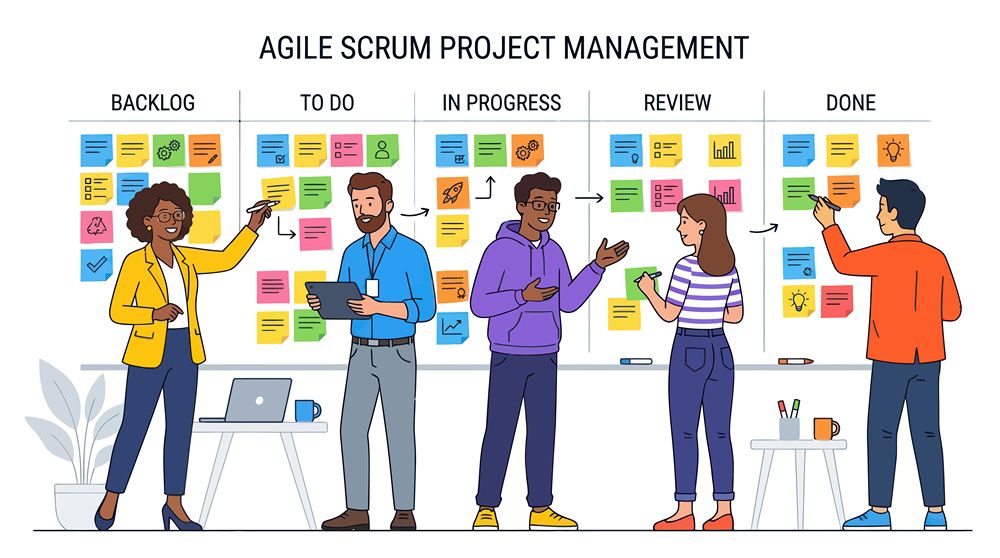
Culture matters as much as ownership, because debt is ultimately about the daily decisions your software engineers make under deadline pressure. A team that treats every shortcut as shameful will hide debt; a team that treats debt as a normal, discussable tradeoff will surface it, tag it, and pay it down. The goal is psychological safety around admitting "I took a shortcut here and it needs revisiting," backed by a process that captures that admission as a tracked backlog item rather than a mental note that evaporates. Regular debt-review discussions, where the team looks at the metrics together and decides what to tackle, turn debt from a source of quiet resentment into a shared, manageable workstream.
Sometimes the honest answer is that you need outside help, and knowing when is its own skill. If your team lacks the bandwidth or the specific expertise — deep refactoring of an unfamiliar legacy stack, standing up a DevOps pipeline from scratch, an architectural assessment nobody internally can do objectively — bringing in a partner is often faster and cheaper than learning on the job. The distinction between the strategic advisor and the hands-on builder matters here, a difference we unpack in our breakdown of software consultant versus software engineer, and the broader role of technical leadership in our guide to what an IT consultant actually does.
Where should an engineering leader start this quarter?
Start by making the debt visible, because you can't manage or fund what you can't see. Run an assessment — automated tooling for the code and architectural layers, plus a structured conversation with the team about the debt they know is there but hasn't been captured. The output is a categorized, prioritized debt backlog ranked by business impact and risk, not by how much the code offends anyone. That single artifact does more to change the conversation with leadership than any amount of complaining about code quality, because it turns a vague anxiety into a concrete, fundable plan.
Then budget for it and protect the budget. Commit to the 15–20% of engineering capacity that research supports, tracked in the same backlog as features so the tradeoffs are explicit every sprint. Resist the pull toward a dramatic all-at-once cleanup; the incremental, continuous approach is both cheaper and far more likely to survive contact with the next urgent deadline. Establish the coding standards, code review discipline, and automated testing that stop new debt from forming, since prevention beats remediation every time.
Finally, decide where you need help and where AI fits. Use modern tooling to measure and prioritize debt automatically, and bring in a partner where you lack the bandwidth or expertise for the heavy modernization work. The through-line across all of it is the same reframe: technical debt isn't a problem to be eliminated but a tradeoff to be managed — deliberately, visibly, and continuously. If you're building that practice and want an experienced partner to accelerate it, talk to our team about turning an unmanaged debt load into a controlled, strategic one.
Key Things to Remember
- Technical debt is a tradeoff, not a failure. Coined by Ward Cunningham in 1992, it's the future cost of choosing a faster solution now — fine when chosen and repaid, dangerous when invisible and ignored. The financial metaphor is what lets you make the business case.
- Know the types. Code, architectural, design, documentation, infrastructure/DevOps, process, and security debt each need different fixes. Gartner predicts 80% of technical debt will be architectural by 2026 — the most expensive category to unwind.
- Intentional beats unintentional. Prudent, deliberate debt taken with a plan to repay is a tool; unintentional or reckless debt is a liability. Fowler's Quadrant and McConnell's intentional/unintentional split are the frameworks to reason with.
- The consequences compound quietly. Tech debt costs US firms $2.4T/year; developers spend ~42% of their week on it; high-debt orgs ship 25–50% slower. It taxes velocity, morale, and security until it forces a reckoning.
- Measure, then prioritize by impact and risk. Tools like SonarQube quantify debt; prioritize what's slowing delivery or exposing you to breaches, and defer what isn't. Translate debt into business consequences leadership can fund.
- Budget continuously — don't cleanup all at once. McKinsey recommends 15–20% of IT budget for systematic debt reduction; skipping it means 30–40% later gets consumed by crisis fixes. Refactor incrementally, enforce standards, automate testing.
- Legacy systems are just compounded debt. When maintenance-to-feature ratio passes ~40–50%, incremental refactoring gives way to planned modernization — and unmanaged debt becomes the ceiling on AI and automation adoption.
- Assign ownership and build the culture. Debt that's everyone's problem is nobody's job. Clear ownership, psychological safety to surface shortcuts, and regular debt reviews turn it into a managed workstream.

%402x.svg)
%402x.svg)

