



.svg.png)

The deal closes and the clock starts. Everything that justified the purchase price — the synergies, the strategic logic, the model the investment committee approved — now has to be earned in the messy work of combining two organizations that ran independently until this morning. Most acquirers get this wrong: 70–90% of mergers and acquisitions fail to deliver their intended value, and the leading cause is post-merger integration failure, not bad deal selection. This guide is for the deal partner, operating partner, or integration leader who has to turn a signed agreement into realized performance. It lays out a post-merger integration strategy built around the first 100 days — the workstreams, the Day 1 guardrails, the governance cadence, and the synergy tracking that separate the integrations that create value from the ones that quietly destroy it. The deal thesis was the easy part. This is the part that decides whether it was worth doing.
What is post-merger integration, and why is the 100-day plan so critical?
Post-merger integration is the structured, milestone-driven process of combining two companies — their people, processes, systems, and cultures — to capture the synergies and strategic value that justified the transaction. It's worth being precise here: PMI is distinct from deal close. The close is the legal and financial transfer of ownership. Integration completion is when the combined entity actually operates as a unified organization, capturing the cost reductions, revenue synergies, and capabilities that justified the purchase premium. Closing is the starting line, not the finish, and confusing the two is where a lot of acquirers lose the plot.
The first 100 days carry disproportionate weight because momentum, morale, and synergy capture all peak in that window and decay fast afterward. Belief hardens only when the first quarter produces visible, bankable progress — customers feel continuity, employees see clarity, investors can touch early synergy capture. When the first hundred days drift, momentum evaporates and the value goes on holiday. The 100-day plan isn't an arbitrary deadline; it's the highest-leverage period in the entire deal lifecycle, and what happens in it sets the trajectory for everything that follows.
The stakes are quantifiable. On average, 70% of companies overestimate scale synergies, yet those who publicly track and disclose realization achieve 6% higher relative total shareholder return. The gap between a good integration and a bad one isn't strategic brilliance — it's execution discipline in a narrow window. A merger integration strategy that treats the 100-day plan as the core operating document, rather than a box to check after close, is the single biggest predictor of whether the deal thesis becomes business reality. That's why the strongest acquirers, especially in private equity where hold periods and return math leave no room for a slow start, obsess over the first hundred days.
How does due diligence set up integration success?
Integration success is largely determined before the deal closes, in the quality of due diligence. The integration plan should be built from diligence findings, not started from scratch after close — the two are meant to be continuous. When the diligence team has already mapped the target's systems, identified the synergy initiatives, and flagged the integration challenges, the integration leader inherits a running start. When diligence was a risk-screen filed in a drawer, the integration team spends the first month rediscovering what should already be known, burning the very momentum the 100 days depend on.
This continuity is where a lot of deals leak value. The synergies named in the model have to be traceable to specific operational actions with owners and deadlines, and that traceability starts in diligence. A synergy that isn't assigned to a specific person with a specific date isn't a synergy plan — it's a hope. The best acquirers carry a thread from the diligence call straight into the integration roadmap, so that Day 1 arrives with a plan rather than a discovery period. This is the operational reason the technology assessment matters so much, a point we made in our companion piece on technology due diligence and integration in private equity deals — the diligence process is where the integration either gets its foundation or loses it.
The technology dimension deserves particular attention because most synergies route through IT. The majority of synergy initiatives are IT-dependent, so diligence has to surface the systems overlap, the technical debt, and the integration complexity that will determine how fast — or whether — those synergies land. An acquirer who understands the target's technology environment going into close can sequence the technology integration realistically; one who doesn't will watch the synergy timeline slip as IT problems surface one by one. Diligence isn't a separate phase from integration. It's the first phase of it.
What does Day 1 readiness actually require?
Day 1 has exactly one job: business continuity. The combined entity has to keep serving customers, paying people, and running operations without a stumble, while the acquirer signals stability to everyone watching. Day 1 readiness means a runbook of the concrete things that must be true the moment the deal is legal — customer communications ready, employee messaging clear, systems access provisioned, basic financial controls in place, and legal-entity and brand-use items handled. It is deliberately not the day you re-architect the business; it's the day you prove nothing breaks.

The communications piece is where Day 1 is won or lost, and it's tightly time-boxed. Customers need one clear message, one FAQ, and a named escalation path so they experience continuity rather than confusion. Employees from the acquired company need a shared vision and a reason to stay, communicated clearly and consistently — because the moment a deal is announced, competitors and executive search firms start calling your newly acquired key employees. Retention packages for the identified top talent should be agreed and communicated within the first weeks of closing, not months later, because the window for retaining critical people is narrow and closes fast.
Underneath the visible Day 1 actions sits governance that has to be stood up immediately. The strongest acquirers establish an Integration Management Office with a single value tree, a KPI pack, an issue log, and a risk heat map before Day 1, not after. A decision log started on day one — capturing who decided what and why — becomes the backbone of accountability for the whole integration. Day 1 guardrails protect customers and people while the harder integration work gets sequenced behind them. Get Day 1 right and you've bought the credibility to do everything else; get it wrong and you spend the next ninety days recovering trust instead of capturing value.
What are the core workstreams of a post-merger integration plan?
A serious integration plan organizes the work into standard workstreams so nothing falls through the cracks and dependencies stay visible. The widely used structure, validated across the major M&A advisory playbooks, runs eight streams: HR and people, IT and systems, finance and treasury, operations and supply chain, customer and commercial, legal and compliance, communications and branding, and synergy capture. A typical mid-market deal needs roughly 60 to 120 named integration tasks across these eight streams in the first 100 days — which tells you why ad-hoc integration fails at any real deal size.

The HR and people workstream is the highest-risk stream in 78% of mid-market deals, because the people decisions made in the first 30 days set the tone for everything else. Its core deliverables are concrete and time-boxed: a full org design for the combined entity with named roles down to manager level by Day 30, retention plans for the top 10–25% of employees identified in diligence, compensation-band harmonization by roughly Day 90, and benefits consolidation by Day 180. Cultural integration runs through this stream too, and it's frequently the deciding factor between success and failure — a strategically sound merger can still be derailed by a culture clash nobody managed.
Naming workstream leads with real authority is non-negotiable. A workstream led by a junior analyst with no decision rights produces a stalled stream that drags every dependent workstream behind it. Workstream leads typically spend 30–50% of their time on integration in the first 100 days, dropping to 15–25% afterward — which means the acquirer has to actually free up that capacity rather than bolting integration onto people's day jobs. The technology and systems workstream deserves special weight because IT rationalization is usually the largest cost-synergy bucket in any tech-heavy deal, and consolidating duplicate systems and licensing is exactly the kind of work our code modernization and cloud migration capabilities are built to execute without disrupting the core business.
How do you build the governance cadence that keeps integration on track?
Governance cadence is the machinery that turns a plan into execution, and the discipline of it separates winners from strugglers by a wide margin. The standard PMI cadence has four meeting types working at different rhythms. A weekly steering committee — the integration lead plus all workstream leads — reviews status, blockers, and a rolling 12-week look-ahead. A weekly workstream stand-up drives task-level execution within each stream. A monthly sponsor review surfaces strategic issues on the red and amber items. And a quarterly board or investment-committee update reports synergy capture against the financial model. Each rhythm serves a different altitude of decision, and skipping any of them lets problems fester.

The data on cadence discipline is striking and worth internalizing. Acquirers who treat the integration plan as a sign-day deliverable filed in a closet capture an average of 47% of modeled synergies, while acquirers who treat it as a living operating cadence, refreshed weekly by the IMO and reviewed monthly by the sponsor, capture 89%. That is nearly double the value from the same deal, decided entirely by execution rhythm.
A single accountable integration leader must own this cadence end to end. This person sets the rhythm, resolves cross-functional conflicts, holds workstream owners accountable, and communicates progress to leadership and the board. Without one accountable leader, integration workstreams drift independently and the synergy timeline slips — the classic failure mode where everyone is busy and nothing coordinates. The integration leader needs real decision-making authority, not just a coordinator's title, because the whole point of the role is to break the ties and clear the blockers that would otherwise stall dependent streams.
Why do most mergers fail, and how do you avoid the top pitfalls?
The failure statistics are sobering and remarkably consistent: 70–90% of mergers fail to deliver expected value, and the cause is almost always execution after close rather than a flawed thesis. The three most common PMI killers are culture clash, talent attrition, and the synergy execution gap — and all three are predictable, which means all three are preventable with rigorous frameworks. The AOL–Time Warner merger, valued at roughly $350 billion in 2000, remains the canonical example of integration failure at scale, and its lessons still hold: strategic logic means nothing without operational execution.
The synergy execution gap is the one that shows up in the financial model first. Overly optimistic synergy projections set targets the integration can't hit, so realistic estimates grounded in due diligence beat ambitious ones that erode stakeholder confidence when they're missed. The fix is a live synergy tracker, updated monthly, that maps each initiative to its financial baseline, target value, accountable owner, and realization status. When deal sponsors can see exactly where synergy capture is lagging, course corrections happen before value erodes rather than after, and the disciplined steps of synergy capture are what let organizations build momentum and deliver synergies the market can trust. Companies with dedicated PMI tooling and tracking capture meaningfully more value than those managing integration by instinct.
Matching integration approach to deal type is the other frequently botched decision. A scale acquisition within the same industry should prioritize operational consolidation and cost-synergy capture — deep integration, consolidated functions, unified platforms. A scope acquisition entering a new market or acquiring new capabilities should instead minimize disruption to the acquired company while extracting knowledge and market access. These require fundamentally different integration strategies, and confusing them is one of the most common M&A integration challenges acquirers face. The right approach ranges from full absorption — the most execution-intensive archetype, delivering the deepest synergies — to preservation, where a financial sponsor holds the asset with governance oversight but limited operational integration. Choosing the wrong archetype for the deal is a self-inflicted wound.
How does technology integration make or break synergy capture?
Technology integration is where the largest cost synergies live and where the most integrations stall, which makes it the workstream that disproportionately determines the outcome. In tech-heavy mergers, IT application rationalization is typically the single largest cost-synergy bucket — when the buyer and target each run overlapping stacks of software, the consolidation of duplicate systems and licensing represents real, bankable savings. But it's also complex and slow, and delayed IT integration directly blocks the synergies that depend on it. The technology workstream can't be an afterthought; it has to be sequenced deliberately from Day 1.
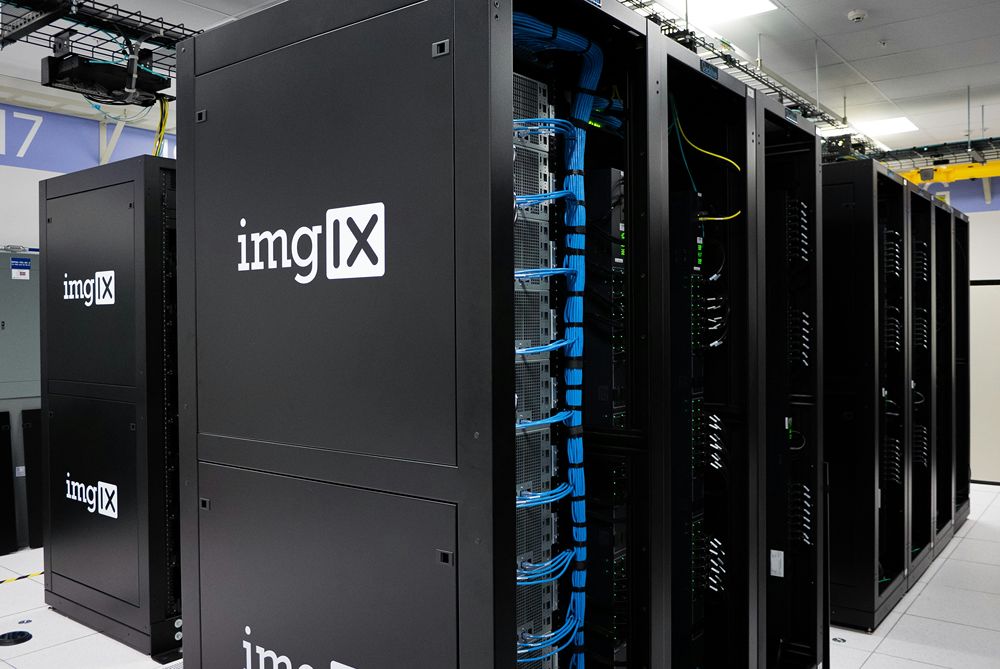
The sequencing matters enormously because rushing technology consolidation breaks the continuity Day 1 was meant to protect. The mature pattern is to stand up landing zones — identity, finance stack, ticketing — early, then migrate and consolidate in waves with realistic timing and dependency maps rather than a big-bang cutover. This is the same discipline that governs any serious systems modernization, which is why post-merger technology integration and platform modernization are really the same problem viewed through the lens of a deal. Our complete guide to cloud migration walks through how to consolidate environments without disrupting live operations, which is precisely the constraint a post-merger IT integration operates under.
Getting technology integration right also unlocks the automation and efficiency gains that often represent the second wave of synergies. Once systems are consolidated onto a unified platform, the opportunity to automate redundant processes and streamline workflows across the combined entity opens up — value that simply isn't accessible while the two organizations run parallel systems. This is where the work we describe in intelligent automation and cloud automation connects directly to synergy capture: the consolidated technology foundation is what makes the operational synergies in the deal model actually achievable. Technology isn't one workstream among eight; it's the enabler most of the others depend on.
How do you turn integration into a repeatable capability?
For any acquirer doing more than one deal, integration should become a repeatable capability rather than a heroic one-off each time. Serial acquirers who build a standard integration playbook — the workstream structure, the cadence, the Day 1 runbook, the synergy-tracking discipline — capture meaningfully more of their forecasted synergies than those who reinvent the process every deal. The playbook is an asset that compounds: each integration refines it, each deal executes faster, and the institutional knowledge stops walking out the door with the last integration leader. This is especially true in private equity, where a fund running a buy-and-build thesis lives or dies on integration repeatability across portfolio companies.
Tooling supports the capability but doesn't replace the discipline. Purpose-built PMI platforms provide workstream tracking, synergy forecasting, decision logs, and board-grade reporting dashboards, and serial acquirers using dedicated tooling capture markedly more forecasted synergy than those working from generic spreadsheets. But the tool is only as good as the operating cadence behind it — a synergy tracker nobody updates weekly is just a more expensive spreadsheet. The capability is the combination: a standard playbook, a real governance rhythm, an accountable integration leader, and tooling that makes the whole thing visible to the people who need to course-correct.
The final piece is knowing when to bring in outside help. Integration demands a surge of specialized capacity — technology consolidation, operating-model design, program management — that internal teams rarely hold all at once, and a partner who understands both the deal context and the execution work can compress months of trial and error. The distinction between an advisor who plans and a partner who executes matters here, a nuance we unpack in our breakdown of the essential role of an IT consultant. If you're building an integration capability or facing a deal that demands deep operational integration, talk to our team about post-merger technology integration that runs from Day 1 through realized synergy.
Key Things to Remember
- Integration, not the deal, decides value. 70–90% of M&A fails to deliver intended value, and the leading cause is post-merger integration failure, not poor deal selection. Closing is the starting line, not the finish.
- The first 100 days are the highest-leverage window. Momentum, morale, and synergy capture peak early and decay fast. Visible, bankable progress in the first quarter is what hardens belief across customers, employees, and investors.
- Integration starts in due diligence. Build the integration plan from diligence findings, not from scratch after close. A synergy not assigned to a named owner with a deadline is a hope, not a plan — and most synergies are IT-dependent.
- Day 1 means business continuity. One customer message, one FAQ, an escalation path; clear employee messaging and retention packages for key talent within weeks; systems access and controls ready. Stand up the IMO and decision log before Day 1.
- Organize around the eight standard workstreams. HR/people (highest-risk in 78% of deals), IT/systems, finance, operations, commercial, legal, communications, and synergy capture — 60–120 named tasks in the first 100 days, each with a lead who has real authority.
- Cadence discipline nearly doubles synergy capture. Treating the plan as a living operating cadence captures ~89% of modeled synergies vs. ~47% when it's filed and forgotten. One accountable integration leader owns it.
- Match the approach to the deal type. Scale deals demand deep operational consolidation; scope deals demand minimizing disruption while extracting capability. Confusing the two is a top integration failure.
- Technology integration is the synergy fulcrum. IT rationalization is usually the biggest cost-synergy bucket; sequence it in waves off Day-1 landing zones, and use the consolidated platform to unlock second-wave automation synergies. Build integration into a repeatable, playbook-driven capability.
Frequently asked questions
What is covered in post merger integration training?
Post-merger integration training typically covers how to plan and run the first 100 days after a deal closes. Core topics include Day 1 readiness, setting up an Integration Management Office, organizing workstreams, governance cadence, synergy tracking, talent retention, and cultural integration. Good training also explains how due diligence findings feed directly into the integration plan.
What is an Integration Management Office (IMO)?
An Integration Management Office is the central team that coordinates all post-merger integration work. It maintains the integration plan, tracks synergies and KPIs, runs the governance cadence, and manages the issue log, risk register, and decision log. Ideally the IMO is set up before Day 1 and led by a single accountable integration leader with real decision-making authority.
How long does post-merger integration take?
Full post-merger integration often takes well beyond the first 100 days, but those first months are the most important. Early milestones include org design and key retention plans, while compensation harmonization, benefits consolidation, and systems consolidation usually continue for several more months. The timeline depends on deal size, complexity, and how deeply the two companies are being combined.
What is the difference between a scale and a scope acquisition in integration?
A scale acquisition combines companies in the same industry, so integration focuses on consolidating operations and capturing cost synergies. A scope acquisition adds a new market or capability, so integration should limit disruption to the acquired business while gaining its knowledge and market access. Choosing the wrong integration approach for the deal type is a common cause of lost value.

%402x.svg)
%402x.svg)

