
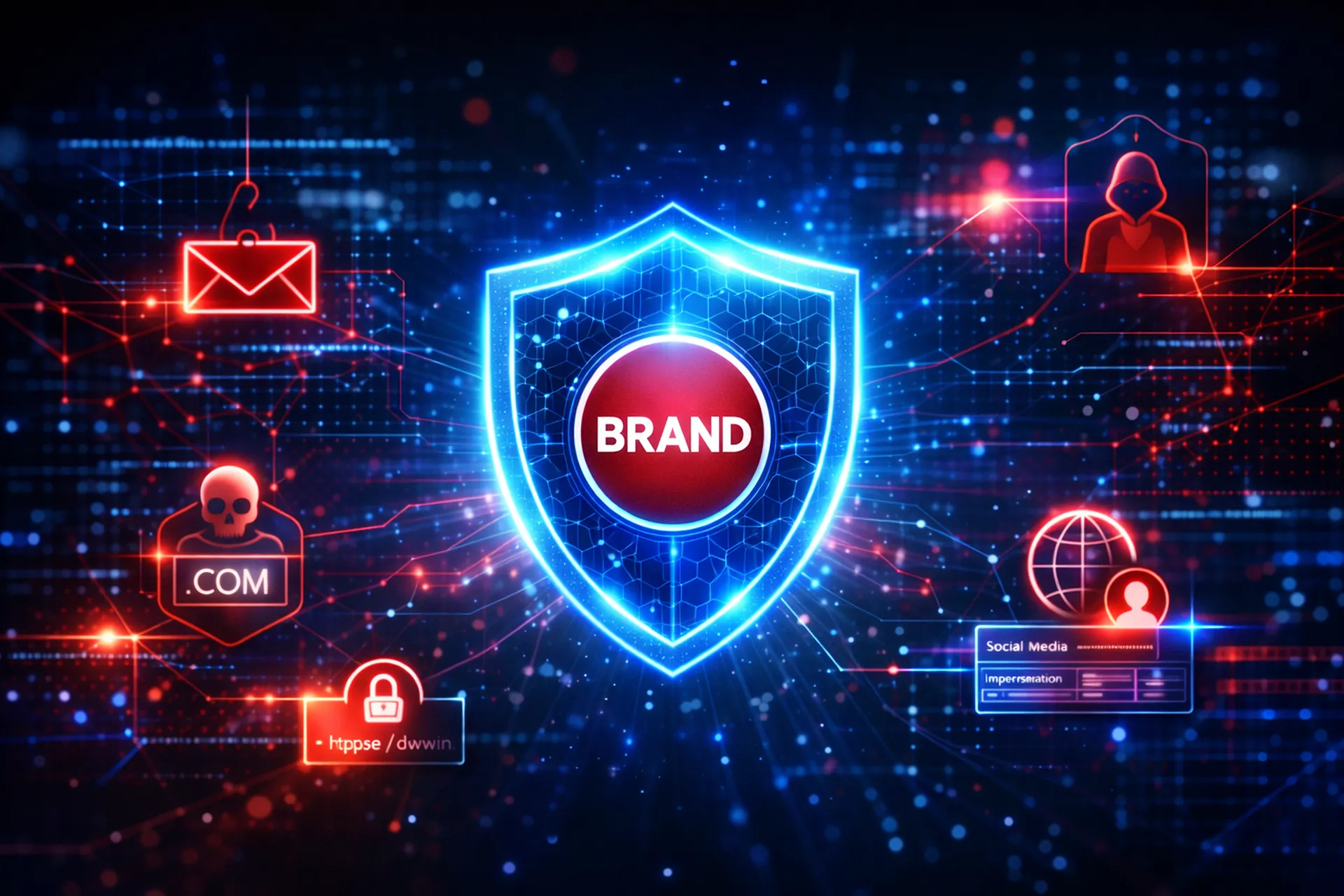

Your brand is one of your most valuable business assets — and in today's threat landscape, it's also one of the most targeted. Brand protection in cybersecurity has evolved far beyond trademark law and logo registration. Today, digital brand protection means actively monitoring the dark web, social platforms, rogue domains, and phishing infrastructure to detect brand abuse before it damages your customers and your reputation. This guide breaks down everything you need to know about digital risk protection, the best brand protection strategies, and how to choose the right brand protection solution for your organization. If your company has a digital footprint worth defending, this article is essential reading.
What Is Brand Protection and Why Is It a Cybersecurity Priority?
Understanding brand protection starts with recognizing that your brand exists far beyond your own controlled channels. Every logo, domain, product name, and customer-facing asset that represents your brand online is a potential target for exploitation. Brand protection in cybersecurity is the practice of identifying, monitoring, and neutralizing threats to your brand across the entire digital landscape — including the surface web, dark web, and everything in between.
Brand abuse takes many forms: counterfeit websites, phishing emails using your company's brand, rogue mobile apps, fake social media accounts, and unauthorized use of brand assets in fraudulent advertising. Each of these forms of malicious brand exploitation erodes customer trust, generates legal liability, and can cause direct financial harm. Cybersecurity teams that once focused exclusively on network defense now recognize protecting the brand as a core part of their mission.
The convergence of cybersecurity and brand protection reflects a broader shift in how organizations define their attack surface. Digital risk protection has become a strategic priority because adversaries increasingly exploit brand trust as an entry point into both organizational and customer systems. A phishing campaign using your brand identity doesn't just harm your customers — it can compromise your entire supply chain.

What Are the Most Common Brand Threats in the Digital Landscape?
Brand threat actors operate across every digital channel with increasing sophistication. Domain squatting — registering lookalike domains that closely mimic a legitimate brand — remains one of the most pervasive cyber threat vectors. Attackers use these rogue domains to host phishing pages, distribute malware, or intercept customer credentials, all while hiding behind the credibility of a trusted brand.
Brand impersonation attacks on social media have surged in recent years. Fraudulent accounts represent your brand visually and linguistically, deceiving customers into sharing personal information or making payments to criminal actors. The speed at which fake accounts proliferate across multiple digital platforms makes manual monitoring nearly impossible without automated brand protection tools.
The dark web adds another dimension to brand risk. Stolen credentials, counterfeit products, and fraudulent brand licenses are regularly traded on dark web marketplaces. Threat intelligence gathered from deep and dark web sources allows security teams to identify emerging brand abuse campaigns before they surface publicly — a critical capability for any organization serious about proactive brand protection.
How Does Digital Risk Protection Differ From Traditional Brand Monitoring?
Traditional brand monitoring focused on trademark enforcement — tracking unauthorized use of logos and names in commerce. Digital risk protection is a far more comprehensive discipline. A digital risk protection solution continuously scans the web, dark web, social media, app stores, and code repositories for any signal that your brand is being exploited, imitated, or weaponized.
The key distinction is scope and speed. Brand monitoring tools of the past operated on periodic scans and manual review workflows. A digital risk protection platform operates in real time, correlating signals across digital environments to surface brand threats as they emerge. Security teams receive actionable threat intelligence rather than raw data, enabling faster takedown and response.
Digital brand protection also encompasses digital risk management at the strategic level. It's not just about taking down infringing content — it's about understanding the brand threat landscape, mapping adversary infrastructure, and continuously improving brand protection strategies based on evolving attack patterns. This intelligence-led approach is what separates effective brand protection from reactive damage control.
What Are the Core Components of an Effective Brand Protection Strategy?
An effective brand protection strategy rests on four pillars: discovery, monitoring, enforcement, and intelligence. Discovery means maintaining a complete inventory of how your brand appears online — every domain, social media accounts profile, app listing, and third-party marketplace entry that uses your brand assets. Without full visibility, your brand protection efforts are operating blind.
Brand protection strategies must include continuous monitoring of the surface web, dark web, and social platforms for unauthorized use of brand assets, brand impersonation, and digital threat actors. Automated monitoring platforms can track thousands of brand signals simultaneously, flagging suspicious activity for human review and initiating automated takedown workflows where appropriate.
Enforcement is the action layer of comprehensive brand protection. This includes legal takedown requests, registrar notifications, platform abuse reports, and coordination with law enforcement for criminal brand abuse cases. Cyber threat intelligence informs prioritization — not every brand violation warrants the same response, and the best brand protection programs allocate enforcement resources to the threats with the highest business impact.

Why Is Dark Web Monitoring Essential for Brand Protection?
The dark web is where brand abuse campaigns are often planned, resourced, and sold before they become visible to the public. Phishing kits designed to impersonate your brand, stolen customer credentials tied to your service, and counterfeit products bearing your brand identity all circulate in dark web marketplaces long before they cause visible harm. Safeguard your organization by monitoring these channels continuously.
Threat intelligence from dark web sources provides early warning of brand-targeted attack campaigns. When security teams identify a phishing kit for sale that mimics your login page, or a bulk dump of credentials from your company's platform, they can act before customers are harmed. This proactive brand protection posture significantly reduces the blast radius of brand abuse incidents.
Dark web monitoring is not a standalone capability — it must be integrated into your broader digital risk protection framework. Threat intelligence feeds from the dark web should flow into your security operations center alongside surface web brand signals, creating a unified picture of your brand risk profile. Organizations that treat dark web monitoring as a separate program often miss the connections between digital threats that span multiple environments.
How Should Companies Choose the Right Brand Protection Solution?
Choosing the right brand protection solution requires a clear understanding of your company's brand risk exposure, operational capacity, and cybersecurity maturity. A brand protection solution that works for a global consumer brand may be entirely different from what a mid-market B2B company or a government contractor needs. Start by mapping your digital footprint across every channel where your brand appears.
Evaluate brand protection software based on detection coverage, takedown speed, threat intelligence depth, and integration with your existing security stack. Top solutions offer domain monitoring, social media protection, dark web surveillance, and digital risk protection in a unified platform. Brand protection tools that operate in silos create gaps that adversaries will exploit.
Investing in a robust brand protection program also means considering the human expertise behind the technology. Brand protection services that include analyst support, legal coordination, and cyber threat intelligence reporting add significant value beyond automated tooling. The right brand protection partner helps you not just detect brand threats but understand them in the context of your specific risk management strategy.

What Role Do Security Teams Play in Brand Protection?
Cybersecurity teams and brand protection functions have historically operated in separate organizational silos — one focused on technical infrastructure, the other on legal and marketing. Brand protection in cybersecurity today demands that these functions converge. Security teams must own digital brand protection as part of their threat management program, not delegate it entirely to the marketing or legal department.
The chief information security officer increasingly owns brand protection as part of the organization's digital risk management mandate. This makes sense: brand impersonation attacks, domain spoofing, and phishing campaigns that exploit your brand are fundamentally cybersecurity problems that require cybersecurity solutions. Cybersecurity measures applied to brand risk include takedown workflows, domain monitoring, and integration with threat intelligence platforms.
Security teams benefit enormously from brand protection data. Indicators of compromise tied to brand impersonation infrastructure — rogue domains, malicious IPs, phishing kit fingerprints — can be ingested as threat intelligence and used to block attacks at the network level. Safeguard your digital perimeter by feeding brand protection signals into your SIEM and threat intelligence platform, creating a closed loop between brand monitoring and technical defense.
How Can Organizations Implement Proactive Brand Protection?
Proactive brand protection means getting ahead of threats rather than reacting to them. This starts with engaging in brand risk assessments that systematically identify how your brand could be exploited — through domain spoofing, social brand impersonation, counterfeit products, or fraudulent advertising. Use these assessments to prioritize protection strategies and allocate resources where exposure is highest.
Comprehensive brand protection strategy implementation requires clear ownership, documented workflows, and defined escalation paths. Who is responsible for taking down a phishing domain at 2 AM? How are customer complaints about fake social media accounts triaged? Successful brand protection programs answer these operational questions before a brand crisis occurs, not during one.
Brand protection efforts should also include employee education and supplier monitoring. Employees who understand brand abuse vectors are more likely to report suspicious activity early. Third-party vendors and channel partners who represent your brand in the market introduce additional brand risk that must be governed through contractual protections, periodic audits, and monitoring of how your brand assets appear in their digital channels. Explore VISIONEERIT's managed cybersecurity services for end-to-end digital risk protection support tailored to your industry.

What Are the Best Brand Protection Tools and Software Available Today?
Best brand protection programs combine purpose-built brand protection software with broader cybersecurity infrastructure. Leading brand protection tools include platforms like Recorded Future, ZeroFox, BrandShield, and Bolster — each offering different combinations of domain monitoring, social media protection, dark web surveillance, and automated takedown capabilities.
Brand protection software should integrate with your existing security infrastructure — including SIEM platforms, SOAR tools, and threat intelligence feeds — to ensure brand signals enrich your overall security posture. Standalone protection tools that don't connect to your security ecosystem create blind spots. Digital risk protection value is maximized when brand intelligence flows into the same workflows your security teams use for all other cyber threat management.
Online brand protection capabilities are evolving rapidly with AI and machine learning. Modern protection solution platforms can now detect brand lookalike domains within minutes of registration, identify brand impersonation accounts using visual similarity models, and automatically initiate takedown workflows without human intervention. Robust brand protection requires staying current with these technological advances, as adversaries are investing in the same capabilities to evade detection. For authoritative guidance on digital risk management frameworks, CISA's brand and identity protection resources and NIST's cybersecurity framework provide strong foundations for protection strategies.
How Does Brand Protection Connect to Broader Online Reputation Management?
Online reputation and brand protection are deeply interconnected — but they are not the same thing. Online reputation management focuses on how your brand is perceived across reviews, media coverage, and public sentiment. Digital brand protection focuses on preventing malicious actors from exploiting your brand to harm customers and erode that reputation. Together, they form a comprehensive brand protection program.
Brand trust is the ultimate asset at stake in both disciplines. When a customer falls victim to a phishing scam using your brand, the reputational damage is often disproportionate to the actual incident. Brand reputation recovery after a high-profile brand abuse event can take years and cost far more than the protection investment that could have prevented it. Protect your brand by treating online reputation and digital risk protection as complementary, integrated functions.
Online brand health should be measured continuously through a combination of sentiment analysis, brand monitoring tools, and digital risk protection platforms. Mitigation of brand threats must be paired with proactive communication strategies that reinforce customer trust. Organizations that connect VISIONEERIT's broader digital transformation capabilities with their brand protection program ensure that every digital initiative strengthens rather than expands their brand attack surface. For a deeper look at how enterprise organizations structure digital risk management, Gartner's research on digital risk protection is an essential reference.
Key Takeaways: What to Remember About Digital Brand Protection
- Brand protection in cybersecurity is now a core security function — not just a legal or marketing concern — requiring dedicated strategy, tooling, and security teams ownership.
- Digital risk protection covers the surface web, dark web, social media, app stores, and domain infrastructure — a far broader scope than traditional brand monitoring.
- Brand impersonation attacks, rogue domains, and fake social media accounts are among the most damaging forms of malicious brand exploitation organizations face today.
- Threat intelligence from dark web sources enables proactive brand protection by identifying attack campaigns before they reach customers.
- An effective brand protection strategy includes four pillars: discovery, monitoring, enforcement, and intelligence — all operating continuously and in coordination.
- Brand protection software should integrate with your existing cybersecurity stack to ensure brand signals enrich your broader threat intelligence and incident response capabilities.
- Security teams and brand protection functions must converge — the chief information security officer should own digital risk protection as part of the organization's risk management mandate.
- Investing in a robust brand protection program is significantly less costly than recovering from a major brand abuse incident in terms of both financial and reputational damage.
- Online reputation and digital brand protection are complementary functions — protecting brand trust requires coordinating both disciplines under a unified comprehensive brand protection strategy.
- The right brand protection solution combines automated detection, dark web monitoring, takedown capabilities, and human threat intelligence expertise tailored to your specific brand risk profile.
Ready to protect your brand from digital threats? Contact VISIONEERIT to explore our digital risk protection and cybersecurity services built for today's threat landscape.
Frequently asked questions
What is digital brand protection in cybersecurity?
It is a core security function, not just a legal or marketing concern. It covers the surface web, dark web, social media, app stores, and domain infrastructure, which is far broader than traditional brand monitoring.
What are the pillars of an effective brand protection strategy?
Four pillars: discovery, monitoring, enforcement, and intelligence. All four need to operate continuously and in coordination.
Why is dark web monitoring important for brand protection?
Threat intelligence from dark web sources lets you identify attack campaigns before they reach customers. That makes brand protection proactive instead of reactive.
Who should own brand protection inside an organization?
Security teams and brand protection functions need to converge. The article argues the chief information security officer should own digital risk protection as part of the risk management mandate.


